The Preferred Choice for Swiss‑Type Lathe Bar‑Feeding Mechanism — Analysis of SAVI‑EPJF Engineering Plastic Bearing Application
From bushing burning and chip scuffing to lubrication‑free long‑life performance — replacing steel with plastic to deliver a more stable, cost‑effective and clean transmission path for bar‑feed systems of precision Swiss‑type automatic lathes.
Industry Background: How the Bar‑Feeding Mechanism of Swiss‑Type Lathes Works
Swiss‑type lathes are dominant machine tools for mass production of slender shafts and small precision components. To a large extent, their machining accuracy depends on the seemingly insignificant bar‑feeding mechanism.
The core feature of a Swiss‑type lathe is that the spindle clamps the bar stock passing through the guide bushing. Acting like a hoop, the guide bushing firmly supports the material close to the cutting zone, greatly improving material rigidity and preventing bending and vibration of slender workpieces. After finishing one workpiece, the CNC system triggers the bar feeder via M‑codes or I/O signals. Servo, pneumatic or hydraulic push‑rod mechanisms advance the bar stock to a preset length and feed it through the guide slot into the spindle.
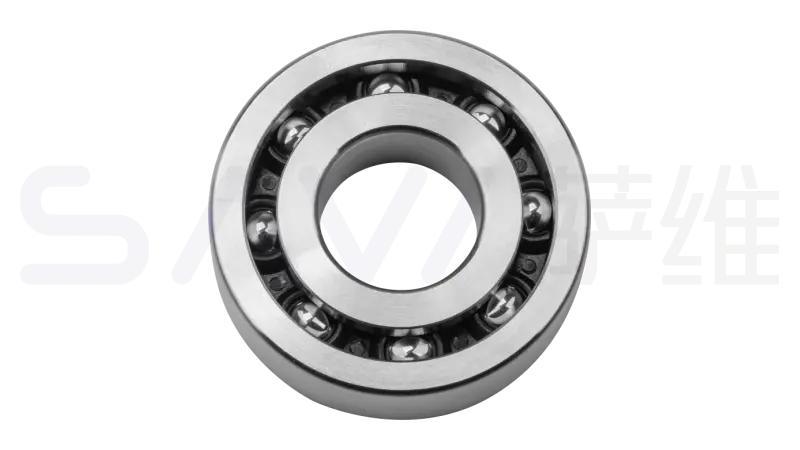
The movable guide bushing serves as the accuracy heart of the system. It consists of drive shaft, guide‑bushing support frame, outer bushing housing, rotary bearings and timing belt. The spindle rotation drives the drive shaft through the timing belt, making the guide bushing rotate synchronously with the spindle. This minimizes material abrasion and guarantees part accuracy. For noise reduction and friction control, many machines adopt oil‑film bar feeders. A hydraulic station sprays special oil onto the inner wall of feed slots under constant pressure of 0.1‑0.2 MPa and forms an oil film to suspend bar stock in the middle of the slot, eliminating direct friction between bar and slot wall at source.
Key Transmission Pairs within Bar‑Feeding Mechanism
Along the bar‑stock movement path, multiple kinematic pairs require bearing or bushing support: push‑rod guidance, guide‑bushing rotary support, feed‑roller support, timing‑belt tension pulley as well as sliding rails for protective covers. These positions are critical application points for engineering‑plastic bearings implementing plastic‑for‑steel replacement.
02 Four Major Pain Points and Challenges of Conventional Solutions
Site surveys in multiple Swiss‑type lathe workshops reveal that the bar‑feeding mechanism is the most failure‑prone and frequently‑replaced assembly of the whole machine. Virtually all root causes trace back to one factor: lubrication.
Lubrication failure and high‑speed bushing burning
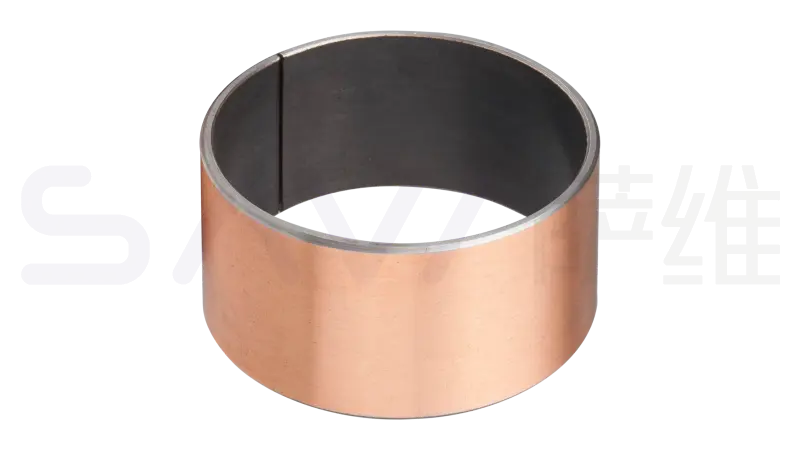
Traditional metal / copper‑based guide bushings and rotary bearings rely on oil‑film lubrication. Once rotational speed rises, the oil‑film may break down and cause jamming or burnt bushings. As machining proceeds, lubricant is squeezed out or depleted, bringing on dry friction and heat generation, which damages both accuracy and guide bushings.
Metal‑chip jamming and inner‑surface scuffing
Fine cutting chips get trapped in gaps between guide bushing and bar stock. High‑speed friction scratches the tungsten‑carbide inner bore. Poor straightness of bar stock introduces continuous unilateral extrusion and partial uneven wear, resulting in fluctuating workpiece dimensions.
Accelerated wear and accuracy drift
Feed guide bushings and collets are among the fastest‑wearing components on the machine. Concentricity must be inspected periodically and parts replaced once wear exceeds threshold to resolve bar bending and mass defective parts. Frequent bushing replacement brings repeated shutdowns and readjustment.
Heavy maintenance workload and oil contamination
Periodic oil replenishment, oil‑circuit cleaning and bushing replacement lead to high downtime costs. Mixtures of splashing oil mist and cutting fluid contaminate workpieces and working environment and increase cleaning labour hours. For precision‑part manufacturers pursuing clean machining, oil pollution itself becomes a yield‑limiting risk factor.
03 SAVI‑EPJF Engineering Plastic Bearing Solution
Targeting the root problem of lubrication dependency, SAVI provides a solution: build lubricating property into the bearing material itself and eliminate reliance on oil‑film completely.
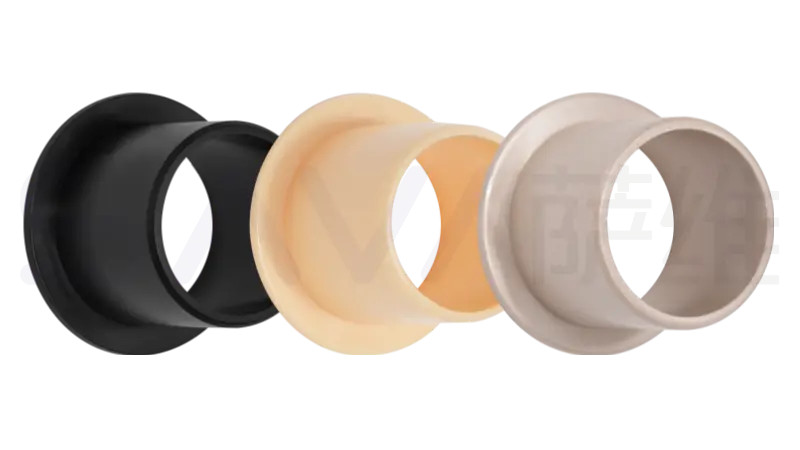
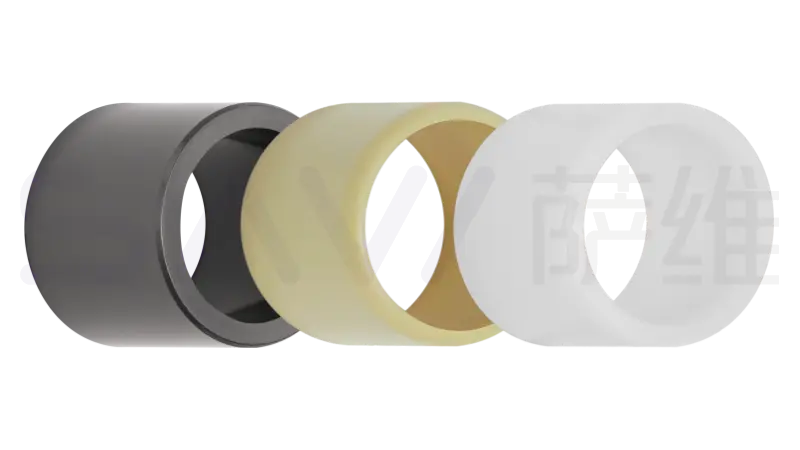
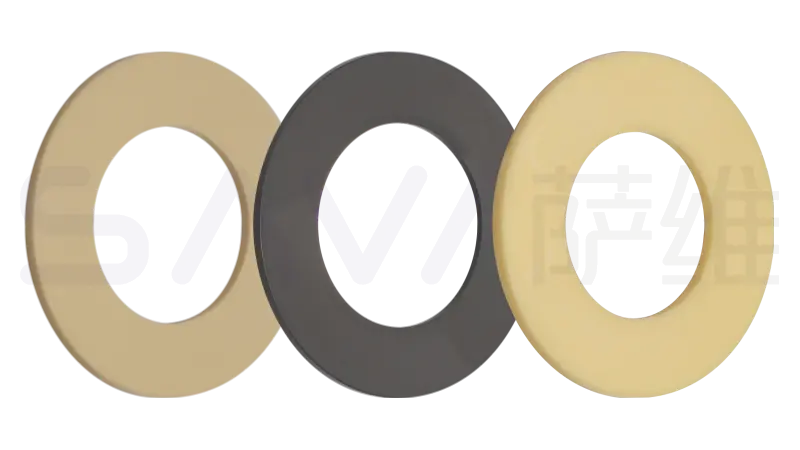
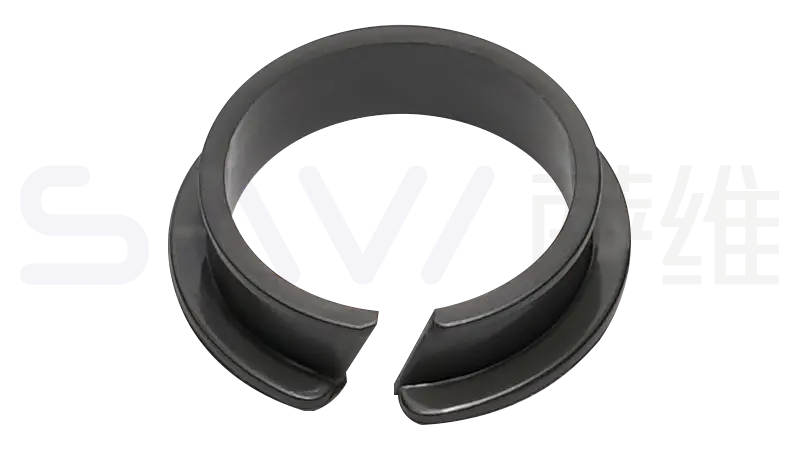
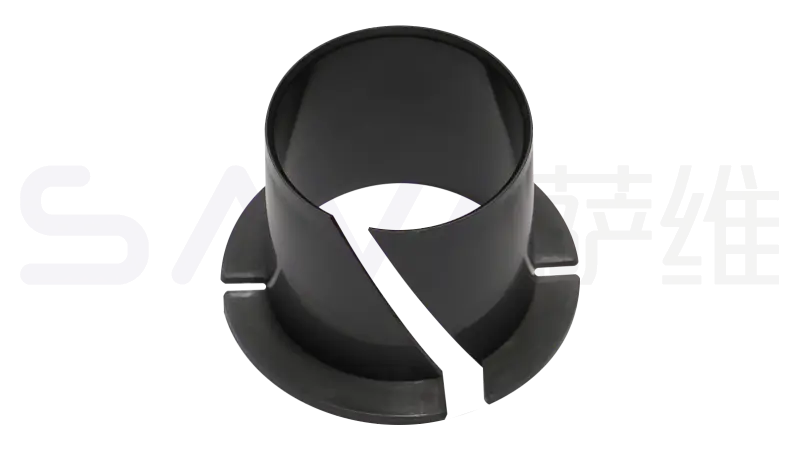
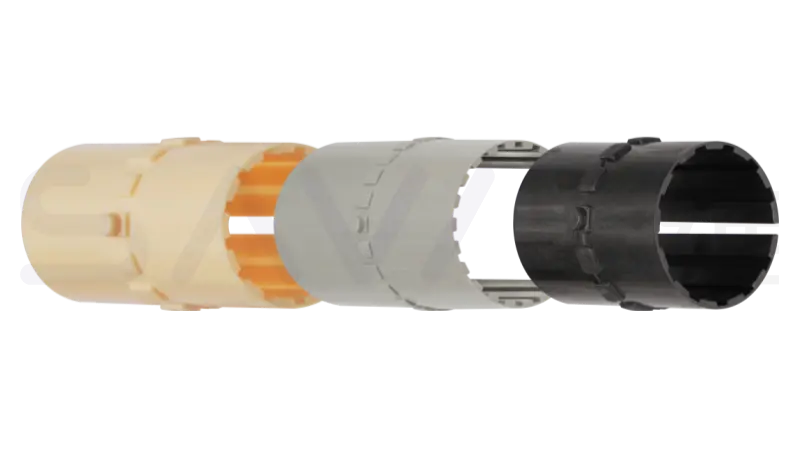
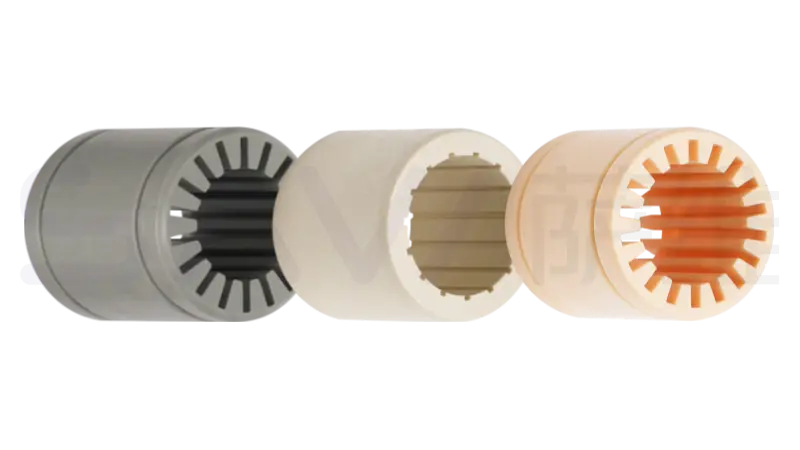
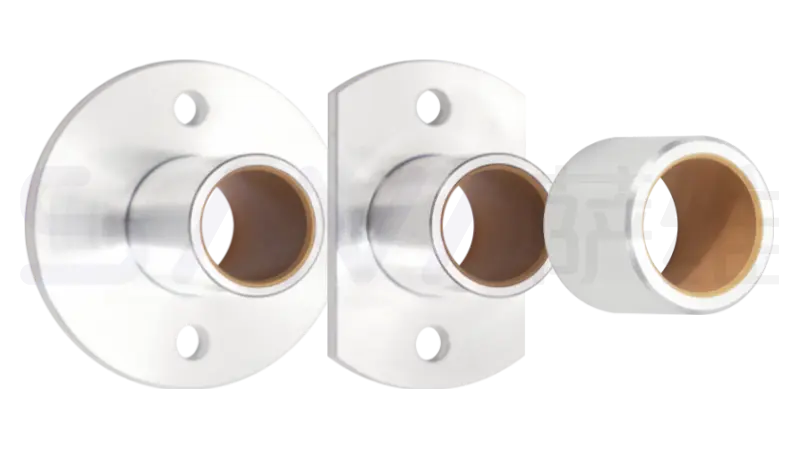
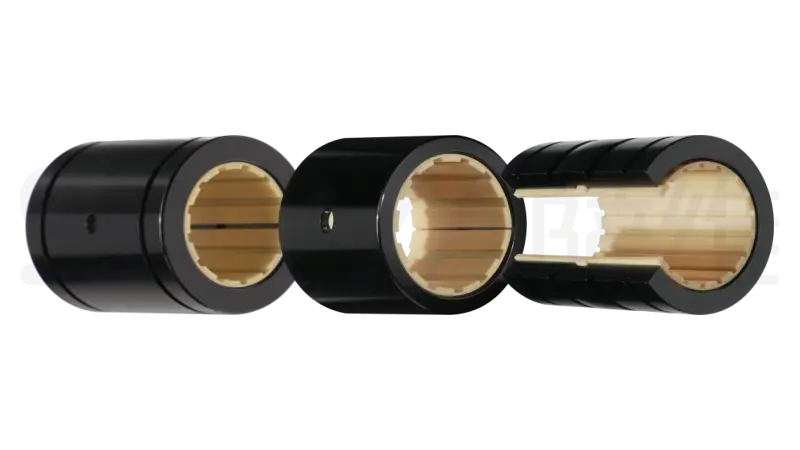
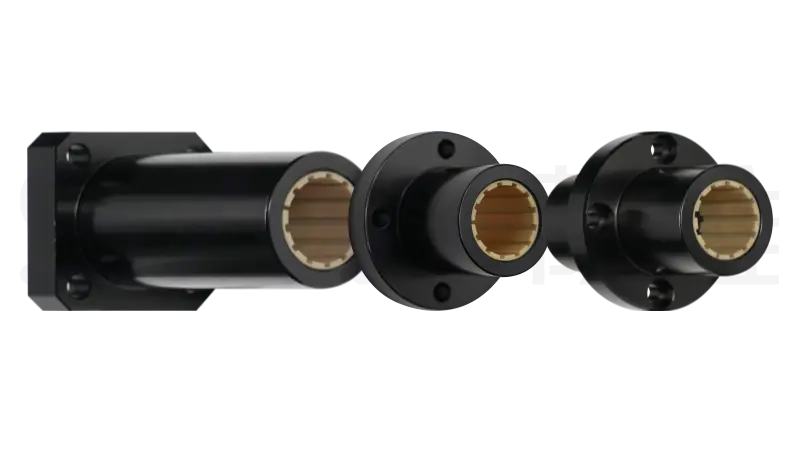
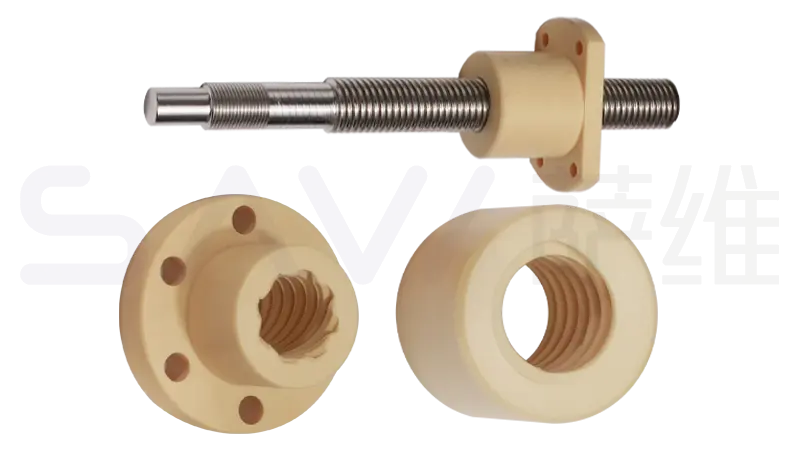
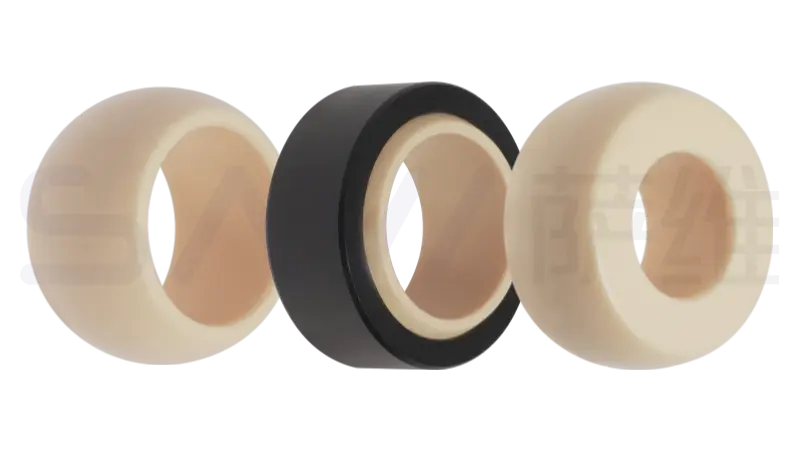
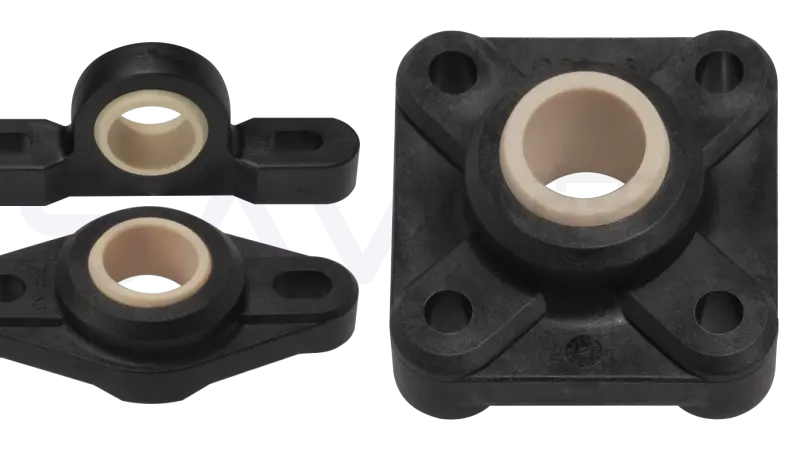
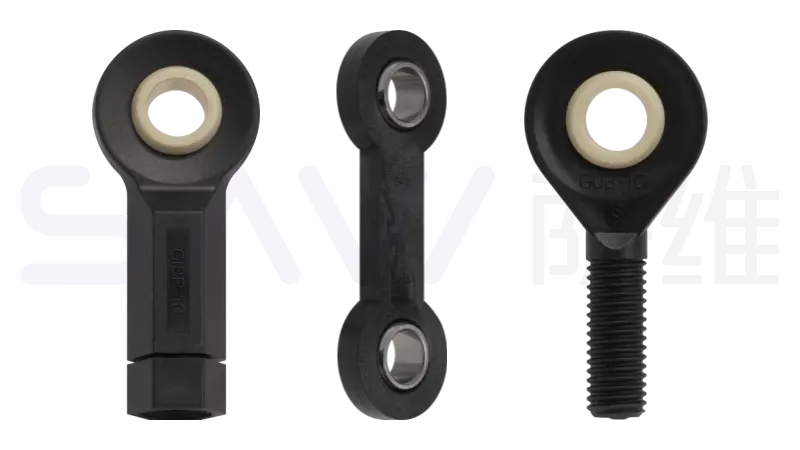
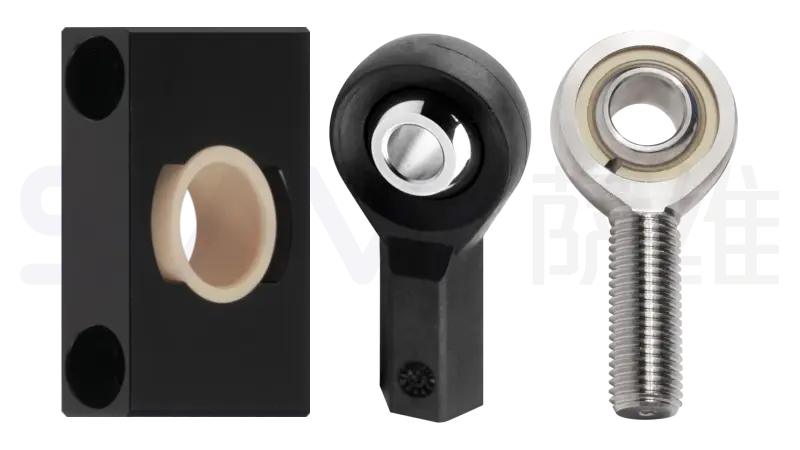
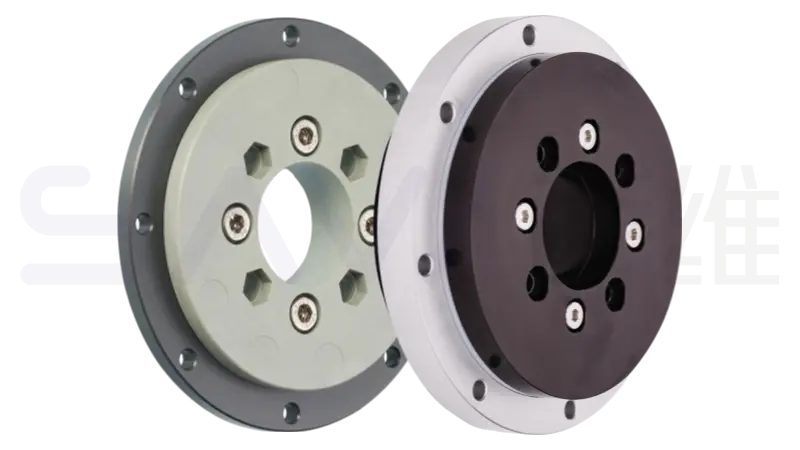
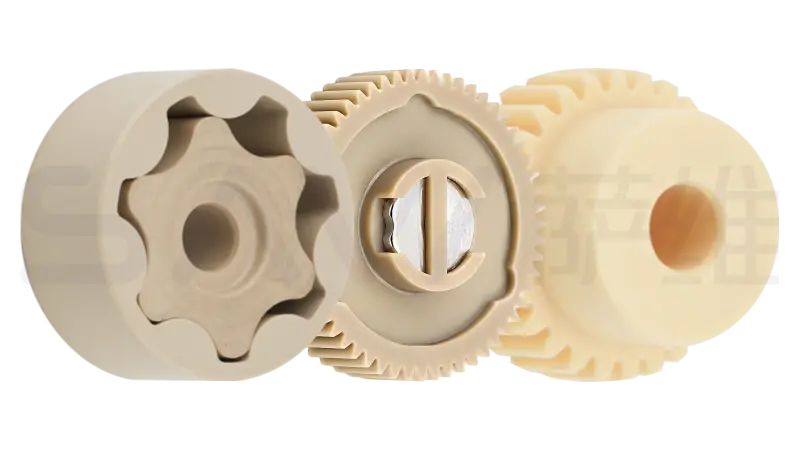
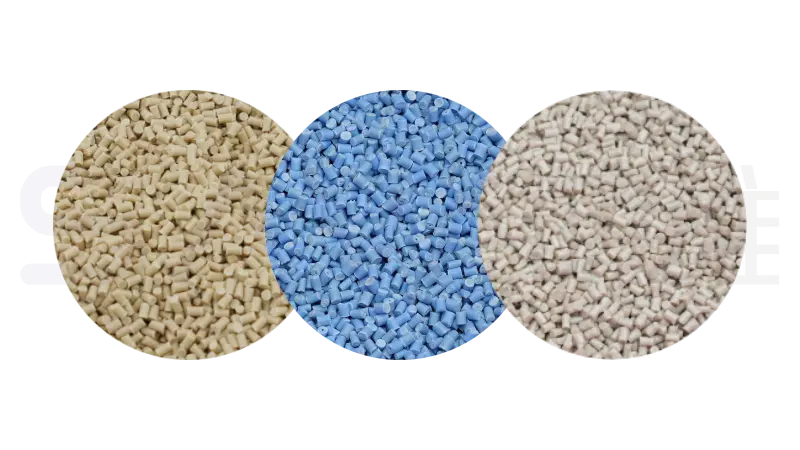
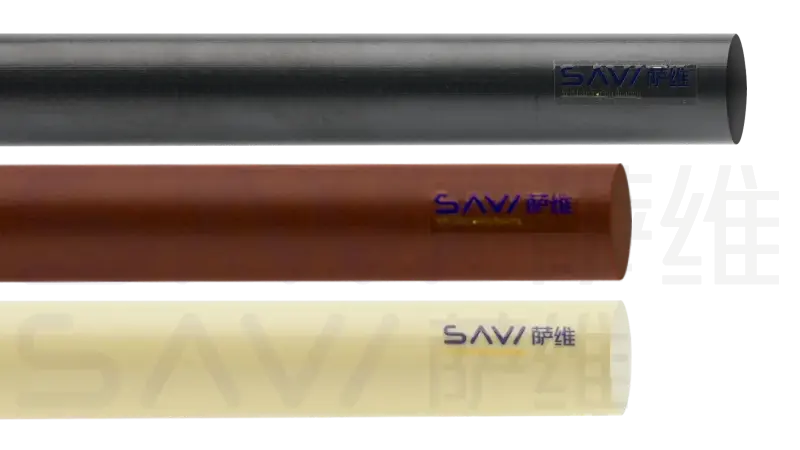
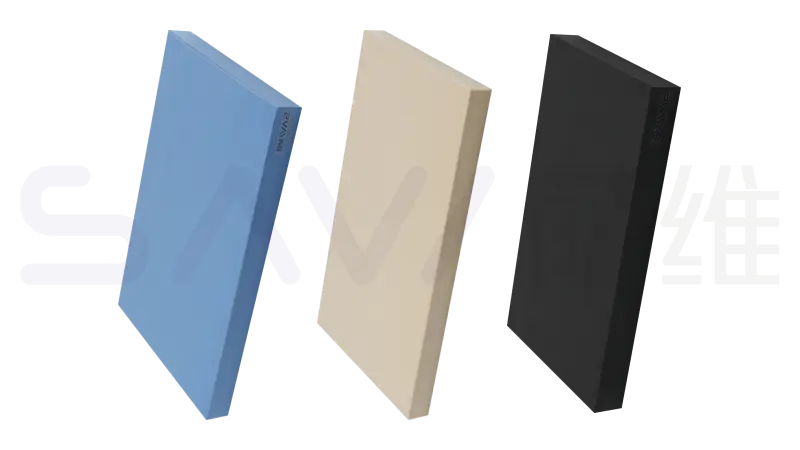
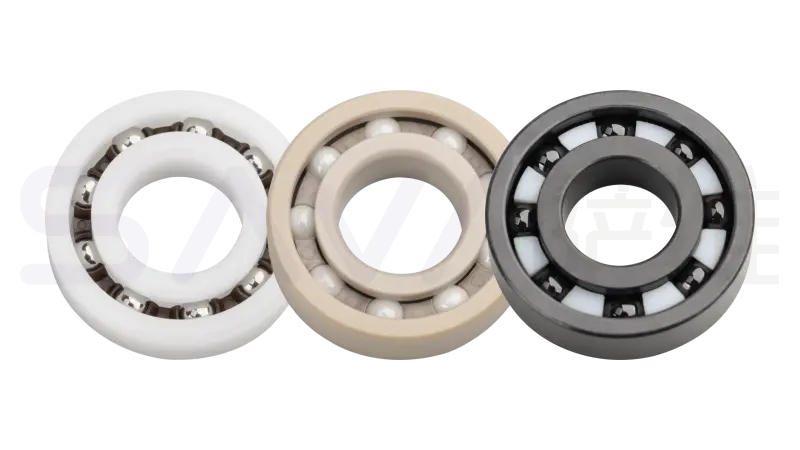
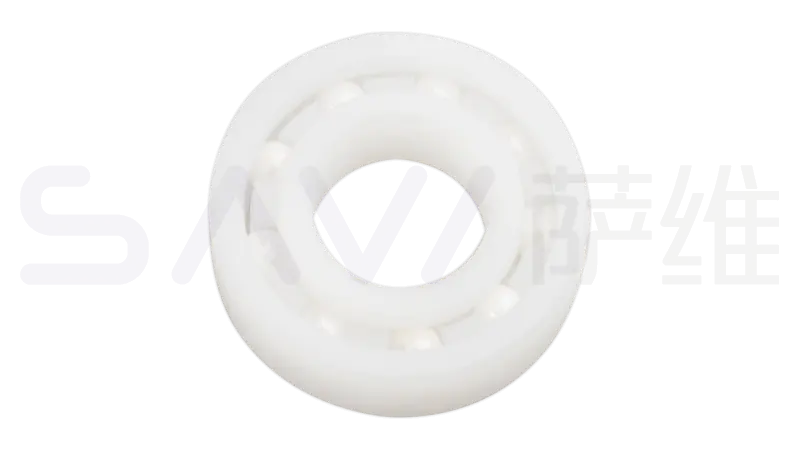
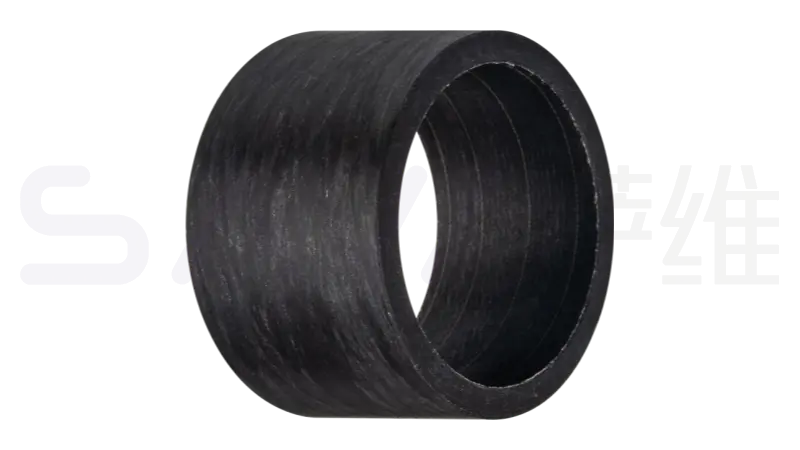
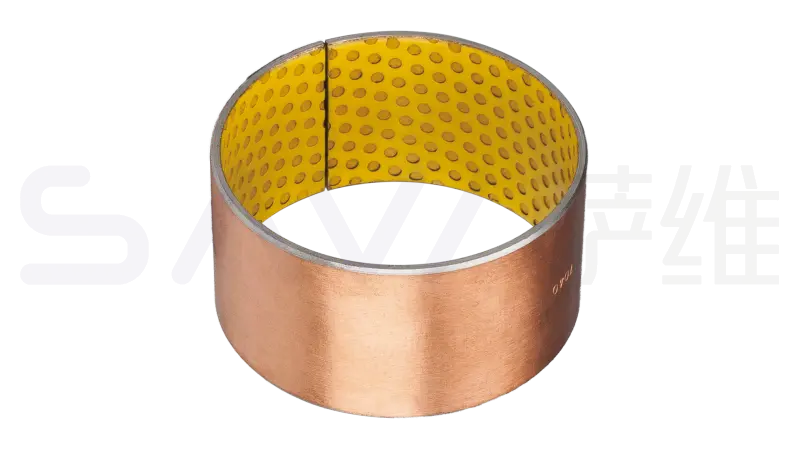
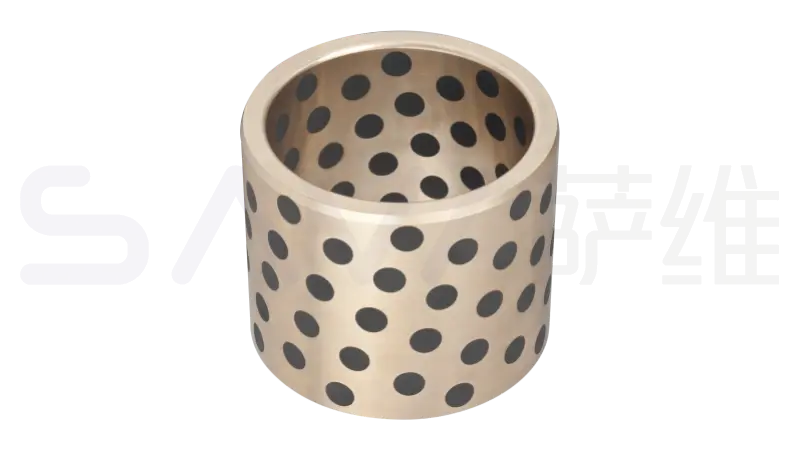
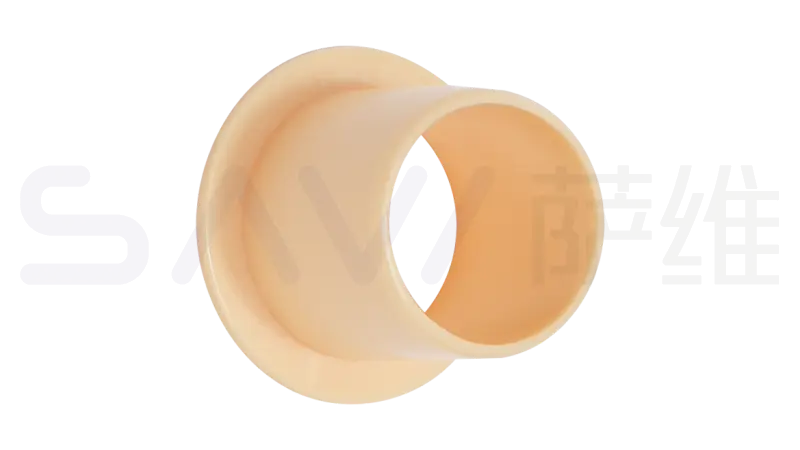
SAVI‑EPJF series is a versatile flanged sliding bearing made of engineering plastic. Its core advantage lies in material formulation: solid lubricants are uniformly embedded within the engineering‑plastic matrix. During operation, micro‑quantities of lubricant are released on friction surfaces to form a transfer film. Full dry‑run performance is achieved with no lubrication, no maintenance and good dust resistance. Since lubricant is integrated into base material, it will not be thrown off by high‑speed rotation, washed away by cutting fluid or scraped off by metal chips — these are exactly the required properties for Swiss‑type lathe bar‑feeding mechanisms.
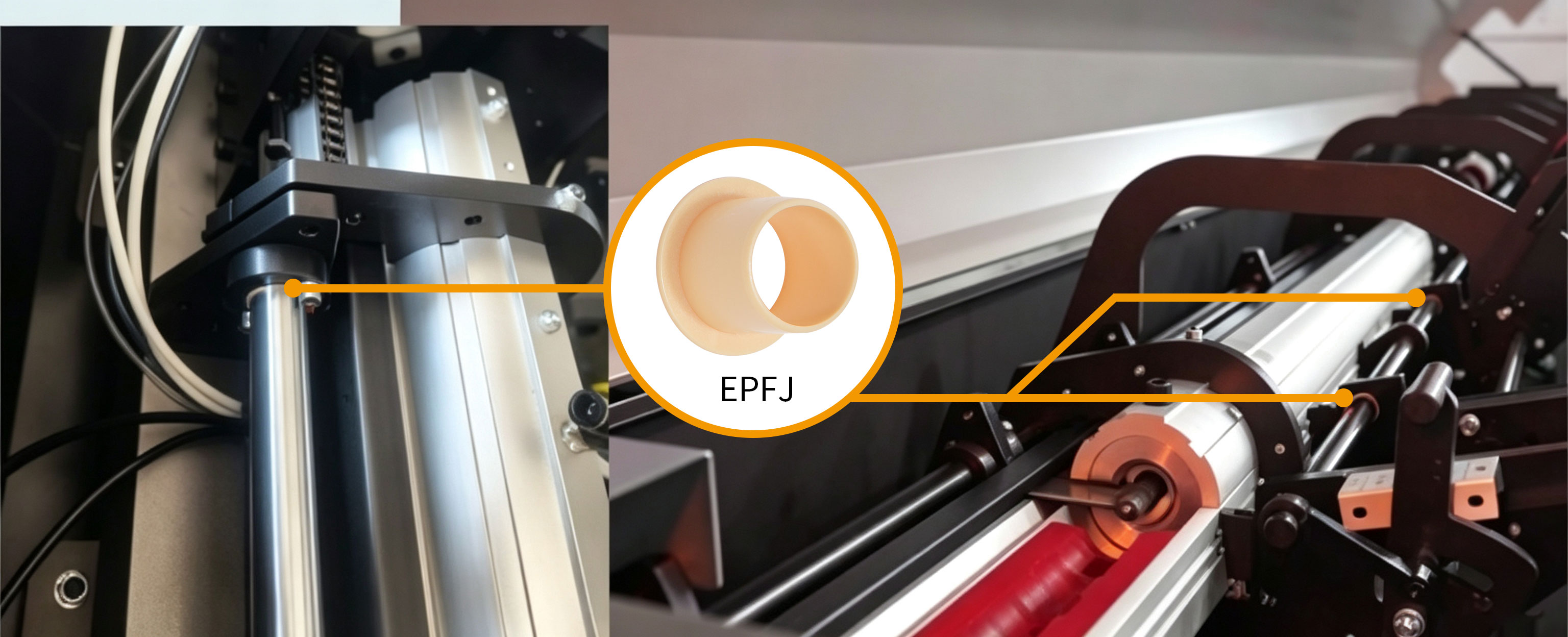
Implementation in Bar‑Feeding Mechanism
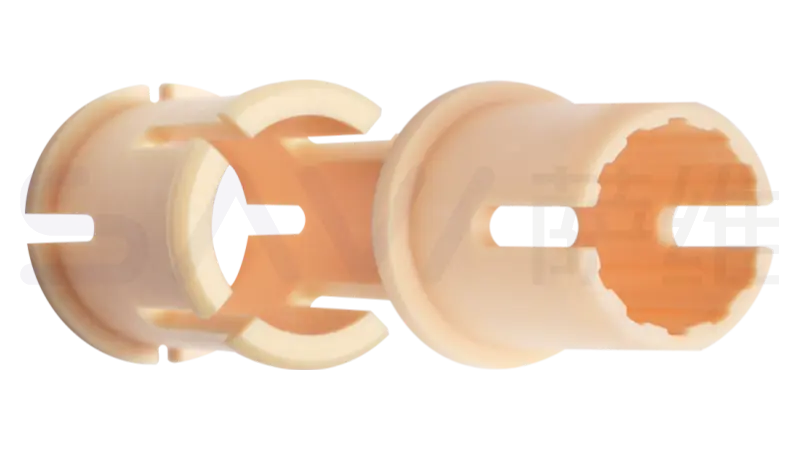
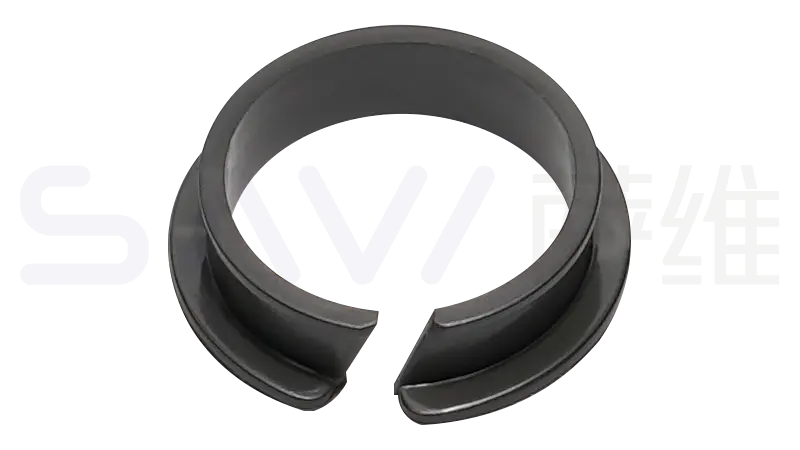
EPJF flanged bushings adopt press‑fit construction and can directly replace original metal bushings without modifying main machine structure. Three typical application positions are recommended: guide‑bushing rotary support (eliminate bushing burning caused by high‑speed oil‑film rupture), push‑rod / feed‑roller guidance (resist chip‑induced scuffing and reduce frictional heat generation), timing‑belt tension pulley and protective‑cover sliding rails (maintenance‑free and dust‑resistant). With relatively soft engineering‑plastic material, it realizes flexible contact against mating bar stock and reduces surface scratches on bars.
“Replacing steel with plastic for lubrication‑free transmission” is not a conceptual innovation created by SAVI, but a proven technical route adopted by global leading manufacturers. Drawing experience from industry benchmarks, we apply this principle specifically to Swiss‑type lathe bar‑feeding scenarios dominated by metal and copper bushings with high wear rate.
One German engineering‑plastic bearing manufacturer embeds solid lubricants throughout the whole working surface. Its products maintain nearly constant sliding coefficient over full service life with zero maintenance. In DMG‑MORI machine‑tool link assemblies, self‑lubricating plastic bearings have replaced original Teflon‑coated metal bearings. Improved wear‑resistance and trouble‑free operation bring 50%‑60% cost reduction and finally convince skeptical design engineers. Solid lubricants embedded inside material cannot be squeezed out or washed off and release no contaminants into environment.
Following this validated technical path, SAVI‑EPJF brings mature lubrication‑free self‑lubrication concept to Swiss‑type lathe bar‑feeding mechanisms.
04 Performance Comparison: Conventional Metal Bearing vs. SAVI‑EPJF
| Comparison Item | Conventional Metal / Copper‑Based Guide Bushing Bearing | SAVI‑EPJF Engineering Plastic Bearing |
|---|
Lubrication Mode | Reliant on external oil‑film lubrication; oil‑film breakdown may cause bushing burning at high speed | Solid lubricants embedded in base matrix; full‑life self‑lubricating dry‑run operation |
| Chip & Dust Resistance | Metal chips tend to get trapped and scuff inner bore; oil sludge adheres to debris and accelerates wear | No oil accumulation or debris adhesion; flexible contact reduces bar‑stock surface scratching |
| Friction & Heat Generation | Friction coefficient rises with lubrication degradation; excessive heat generated under dry‑friction conditions | Stable friction coefficient over entire service life, lower heat build‑up and energy consumption |
| Maintenance Cost | Regular oil replenishment, concentricity inspection and bushing replacement lead to frequent shutdowns | Maintenance‑free; annual maintenance cost can be reduced to approx. 1/6 of original level |
| Service Life | Guide bushings and collets are fast‑wearing consumable parts with short service cycles | Effective service life reaches approximately 2‑3 times that of metal bearings |
| Corrosion Resistance & Cleanliness | Copper / steel susceptible to cutting‑fluid corrosion; oil contamination of workpieces and working environment | Corrosion‑resistant and oil‑free, well‑suited for clean‑machining requirements |
| Load & Temperature Resistance | Proven performance under heavy‑load and high‑temperature conditions with high limiting PV value | Special material grades required for extreme heavy‑load / high‑temperature applications; lower limiting PV value compared with metal |
| Overall Economy | Low initial component purchase cost yet high full‑lifecycle maintenance expenditure | Superior total cost of ownership (TCO) |
The accuracy of Swiss‑type lathes is determined by every single bushing within the bar‑feeding mechanism. Featuring lubrication‑free, maintenance‑free and dust‑resistant properties, SAVI‑EPJF engineering‑plastic bearings help eliminate long‑standing troubles including burnt bushings, chip trapping, frequent replacement and production shutdown. We do not aim to replace all metal bearings, but strive for stable, cost‑effective and clean performance wherever plastic bearings are the right choice.