







• National High-Tech Enterprise
  • Passed 16949 certification
  • ROHS certificationFDA certification
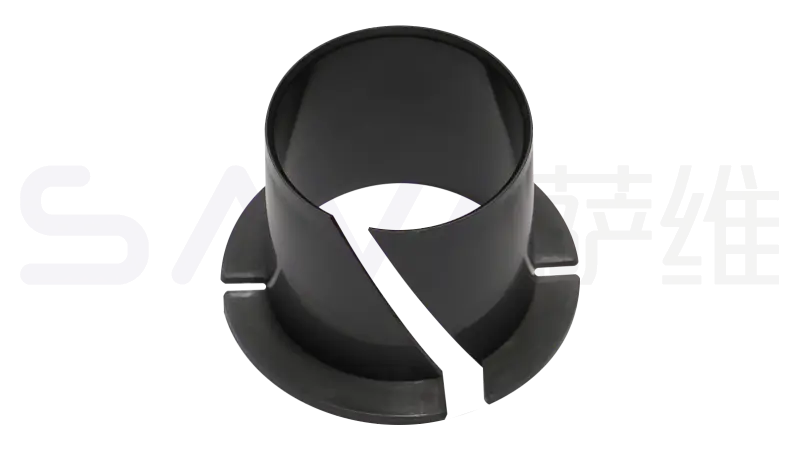
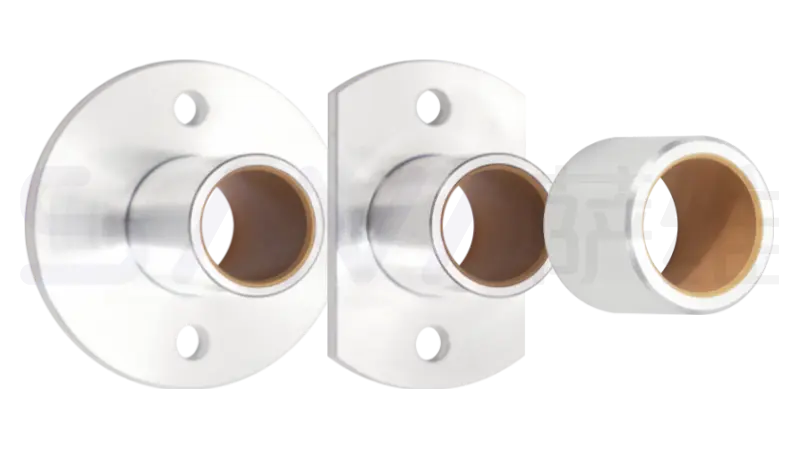
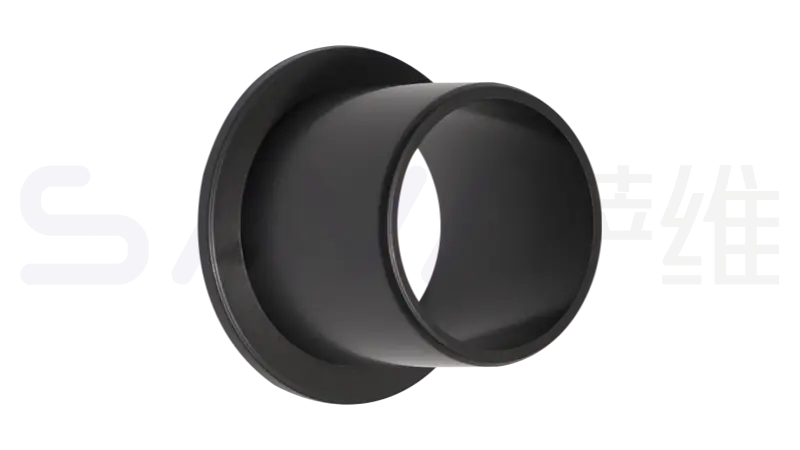
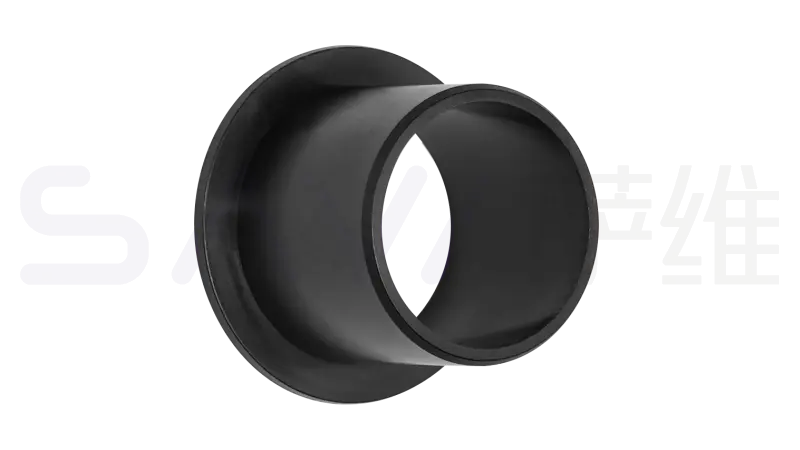
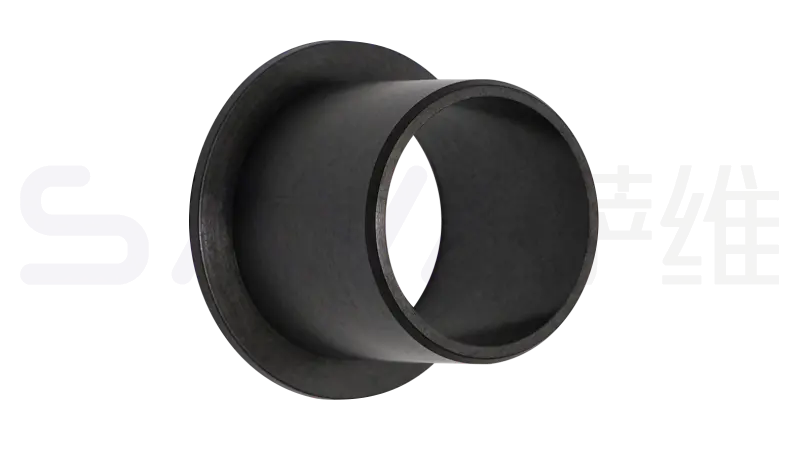
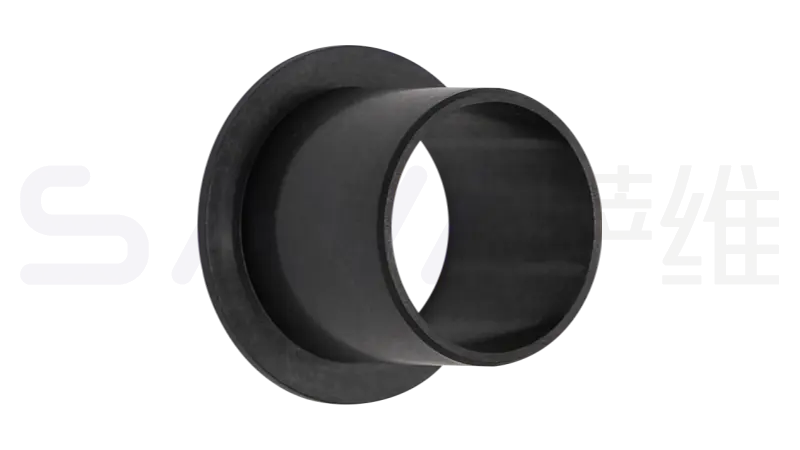
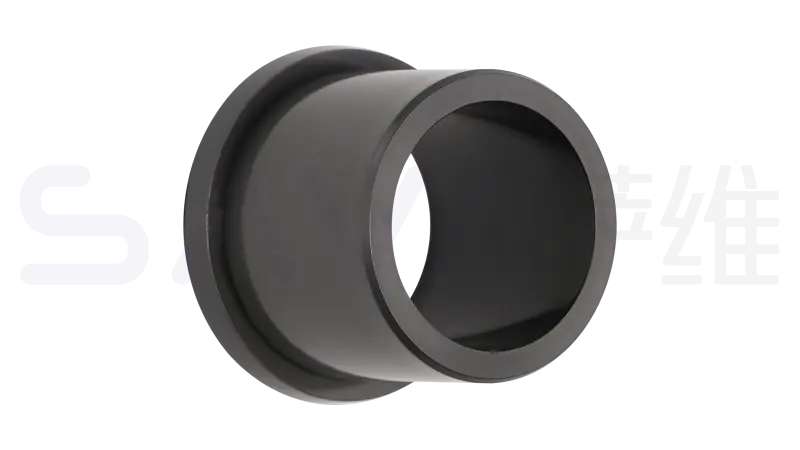
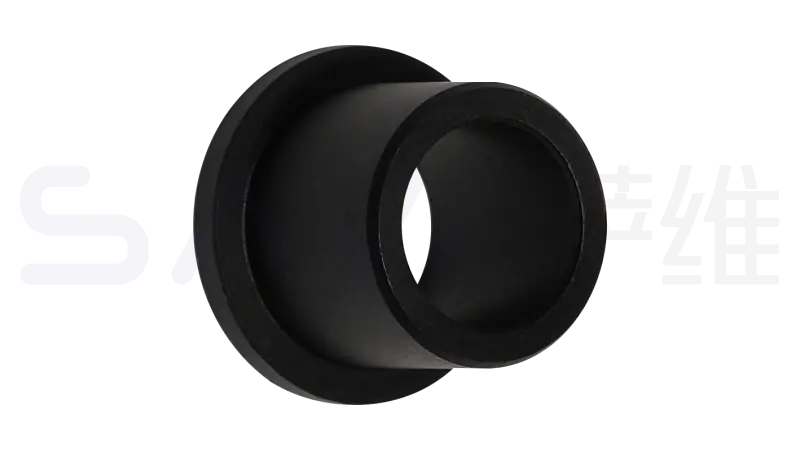
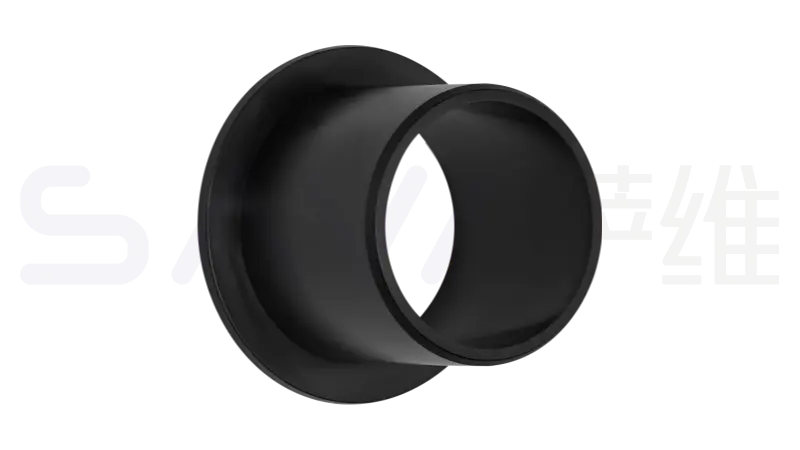
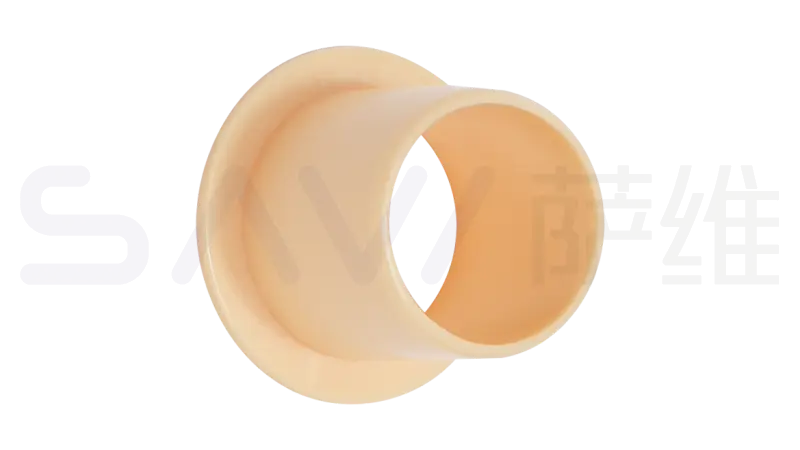
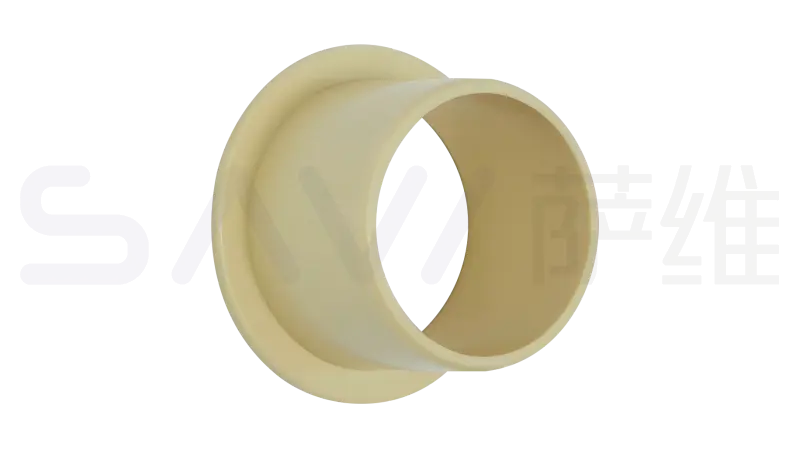
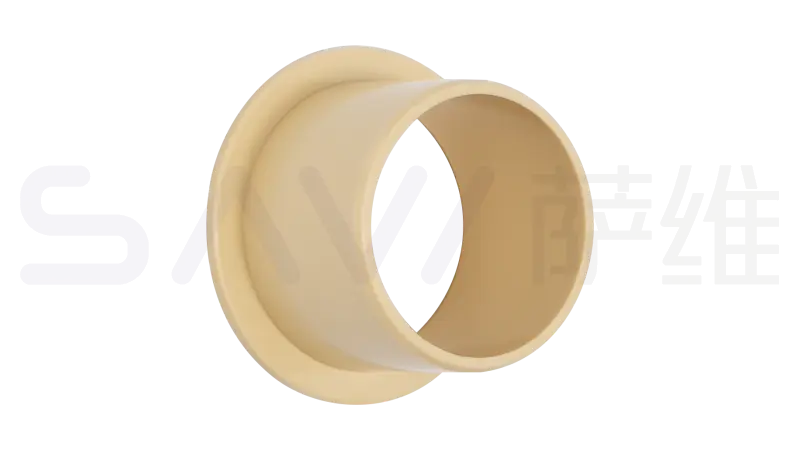
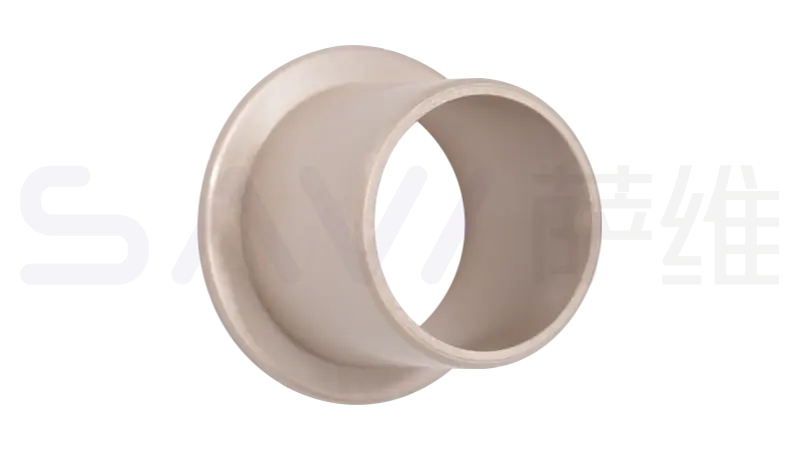
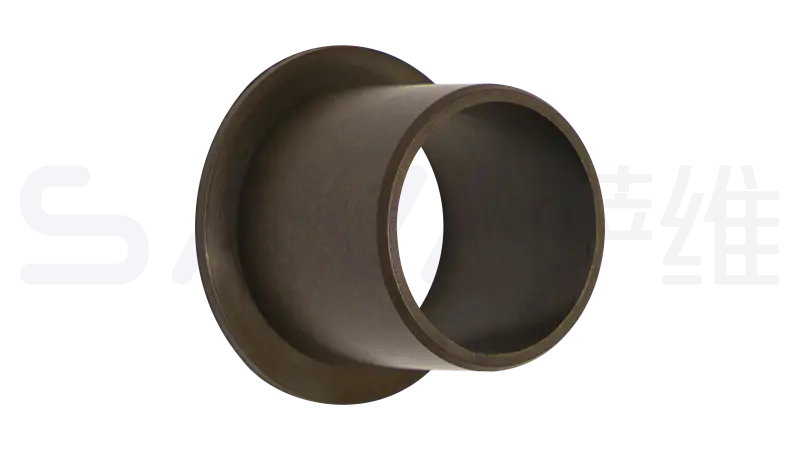
Flanged Sleeve Bushing
  • Flanged Sleeve Bushing

Product Features

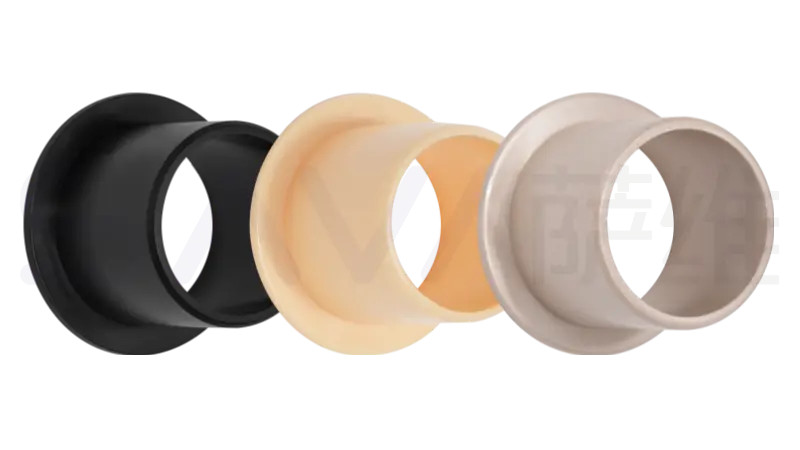
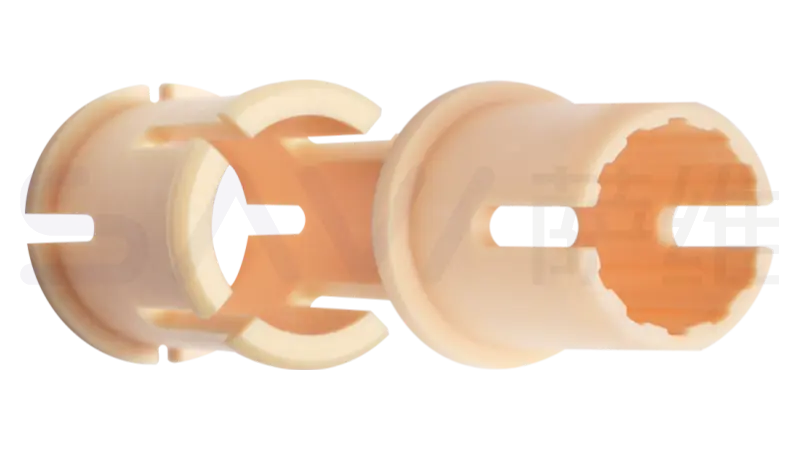
EP series flanged sleeve bearings are one-piece injection-molded engineering plastic bearings. Consisting of a cylindrical bushing body with an extended annular flange at one end, the flange features a larger outer diameter than the sleeve. During installation, the flange closely contacts the end face of the bearing housing to achieve accurate axial positioning.

Compared with straight sleeve bearings, the flanged design eliminates the need for additional snap rings or retaining rings, greatly simplifying installation. It is particularly suitable for axial positioning at pipe ends, hinge structures and space-constrained working environments.

SAVI continuously optimizes the friction and wear performance of engineering plastics to adapt to diverse industrial applications. A wide range of EP series material grades are available to suit different operating conditions, delivering comprehensive advantages:

Dry-running, maintenance-free 

Low friction and low wear 

Wide application and high cost-effectiveness 

Excellent corrosion and chemical resistance 

Dust and dirt resistance 

Shock absorption and noise reduction


Products Details

Brief Description of Material Properties

  • EPGF General Grade: Standard sizes available from stock, self-lubricating and maintenance-free, dirt & dust resistant, excellent versatility. Temperature range: -40 ~ +80°C

  • EPTF Standard Wear-resistant Grade: Dry-running and maintenance-free, wide applicability and cost-effective, low friction and low wear. Temperature range: -40 ~ +80°C

  • EPHF High-temperature & High-load Grade: Retains high load capacity at elevated temperatures, broad chemical resistance, low water absorption and high compressive strength. Temperature range: -40 ~ +200°C

  • EPXF Heavy-load Wear-resistant Grade: Withstands high loads and impact, good shock absorption and cost efficiency, tolerates edge loading. Temperature range: -100 ~ +250°C

  • EPJF Low-friction Durable Grade: Suitable for dry-running and maintenance-free operation, high-load motion and humid environments; delivers excellent wear resistance against nearly all shaft materials. Temperature range: -50 ~ +90°C

  • EPSF Ultra-low Temperature & High-speed Grade: Low friction and great chemical resistance, designed for light-load high-speed motion and service in liquids. Temperature range: -200 ~ +260°C

  • EPQF Shock-absorbing Durable Grade: Shock-absorbing for high-speed operation, minimal wear against different shaft materials, low water absorption and long service life.

  • EPAF Food-grade Heavy-load Grade: Suitable for high-load low-speed applications, broad chemical resistance, FDA compliant.

  • EPX500F High-temperature Long-life Grade: Long service life under heavy loads, high temperature resistance and outstanding wear resistance; excellent performance for oscillating motion under high-temperature conditions.

  • EPDF High-wear Dust-resistant Grade: Long service life and superior wear resistance, suitable for dusty environments, low friction coefficient.

  • EPMF Light-load High-speed Grade: Withstands relatively high loads and impact, economical with good shock absorption, tolerates edge loading.

Scroll left/right to view the full table.

Friction Coefficient and Shaft Surface Roughness

There is a correlation between friction coefficient and shaft surface roughness. Obviously, the friction coefficient is affected by many factors. If the shaft surface is too rough, wear will increase. Minor surface irregularities cause mutual abrasion between the shaft and bearing and form the friction interface. On the contrary, an overly smooth surface tends to cause adhesion, where the two surfaces stick together. A larger force is required to overcome this adhesion, which leads to an increased friction coefficient.

A large difference between static and dynamic friction coefficients will increase the tendency of surface adhesion. This may trigger stick-slip motion accompanied by loud sharp noise. After repeated operation cycles, the noise usually subsides and the rough shaft surface becomes smoothed. Therefore, stick-slip at low speeds should be avoided in applications. Optimizing the shaft surface roughness is essential to maintain stable mounting conditions. SAVI recommends shafts with surface roughness Ra0.2~Ra0.8, hardness above HRC35 and hard chrome plating to prevent shaft abrasion by bearings.

Bearing Wear

Bearing wear resistance is affected by many factors, so it is difficult to accurately predict bearing wear and service life. Multiple tests have identified the main influencing factors: load, speed, motion type, bearing material and roughness, environmental dust, type of external lubricant, etc.

Generally, bearing wear resistance decreases gradually with rising load, speed and temperature. Wear resistance can be greatly improved if external lubricant is applied. If dust enters the bearing, special wear issues will occur. In such scenarios, plain bearings can effectively extend the service life of machinery and systems. The material’s excellent wear resistance and self-lubricating properties can significantly prolong bearing service life. Since there is no oil or grease on the bearing surface, dirt particles are less likely to stick. Most dust particles will shed without potential damage to the bearing.

However, if hard particles enter the bearing contact surface, the plain bearing can embed these particles into its surface. Operation can remain optimal even with accumulated dust. Nevertheless, not only hard particles can damage shafts and bearings. Soft particles such as fabric scraps or paper debris can also accelerate wear. Under such conditions, the dry-running and dust-resistant performance of plain bearings comes into play, helping enterprises reduce operating costs.

Tolerances and Measurement System

The mounting dimensions and tolerances of SAVI plain bearings depend on material grade and wall thickness. Water absorption and thermal conductivity are also critical properties for each material. Plain bearings with low water absorption can be designed with tighter tolerances. Thicker bearing walls require larger tolerances. For this reason, SAVI plain bearings are available in different tolerance grades. Within these tolerances, SAVI plain bearings installed per recommended standards can operate within the permitted temperature range and at humidity up to 70%. We can provide application consultation to support proper bearing selection for environments with higher humidity or underwater service.

Dimension Measurement Method for EP Series Bushings

The plain bearing is pressed into an H7 tolerance housing bore. This interference press-fit ensures bearing positioning, and the inner diameter tolerance of the plain bearing is formed during pressing. A go/no-go gauge is recommended for measuring the bearing inner diameter.

The go end of the go/no-go gauge shall pass through the bearing inner diameter smoothly. The no-go end of the go/no-go gauge shall not pass through.

Installation Instructions

Housing Bore: There are no special restrictions on the material of the housing bore for EP series plastic bearings. One end of the housing bore must be chamfered at 25° to prevent scratching the outer diameter during pressing. A stepped mandrel shall be used for slow press fitting. Direct striking on the end face is forbidden, as it may cause deformation and dimensional deviation. The inner diameter tolerances of EP series products are achieved after pressing into a standard H7 bore.

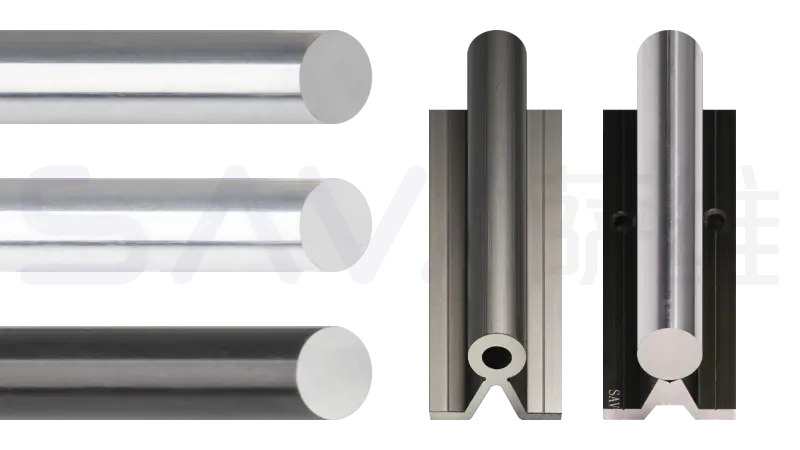
Shaft: No special restrictions apply to shaft materials matched with EP series plastic bearings, but SAVI recommends hard chrome-plated shafts. For easier assembly and protection of the bearing’s inner friction surface, the shaft end must have a smooth chamfer transition. SAVI recommends shaft surface roughness Ra0.2 - Ra0.8. An overly smooth shaft may lead to stick-slip or squeaking noise on the friction surface, while an excessively rough shaft will accelerate bearing wear.

Lubrication Recommendations: Although EP series products are designed as self-lubricating bearings, applying a proper amount of external lubricant (such as grease) on the friction surface during assembly can shorten the bearing running-in period and extend its service life.


EP series materials deliver excellent self-lubricating and wear-resistant properties, as our engineers make full use of self-lubricating material modification technology: high-strength fibers are added into high-performance engineering plastics to boost the load-bearing capacity, while special solid lubricants reduce the friction coefficient. This improves the overall wear resistance and extends the service life of bearings.Three-layer Functional StructureBody Material: High-performance engineering plastic, acting as the wear-resistant carrierFibre: High-strength fibrous network structure to improve load capacity and impact resistanceLubricant: Special solid lubricant to reduce friction coefficient and provide self-lubricationSince the lubricant of EP series bearings is integrated within the bulk material, it will continuously exude from the friction surface to provide long-term lubrication regardless of operating hours. In contrast, conventional powder metallurgy oil-impregnated bearings rely on lubricating oil stored in micropores for self-lubrication. Once the oil is depleted or volatilized, bearing wear rises sharply, marking the end of its effective service life.Application FieldsWhether for automotive industry with stringent durability requirements, high-speed applications, underwater applications, high-temperature and corrosion-resistant applications, or food industry requiring FDA compliance, SAVI provides customized solutions for global industries. EP series flanged bearings are widely used in:Automotive industry: steering pumps, shock absorbers, door hinges, windshield wipers, seat angle adjusters, etc.Office machinery: copiers, fax machines, printers, mail processors, etc.Home appliances: refrigerators, air conditioners, vacuum cleaners, sewing machines, fitness equipment, etc.Hydraulic components and valves: gear pumps, piston pumps, ball valves, cylinders, etc.Packaging machinery, textile machinery, port machinery, agricultural machinery and other engineering equipmentFood and pharmaceutical packaging industries (FDA-compliant materials)