
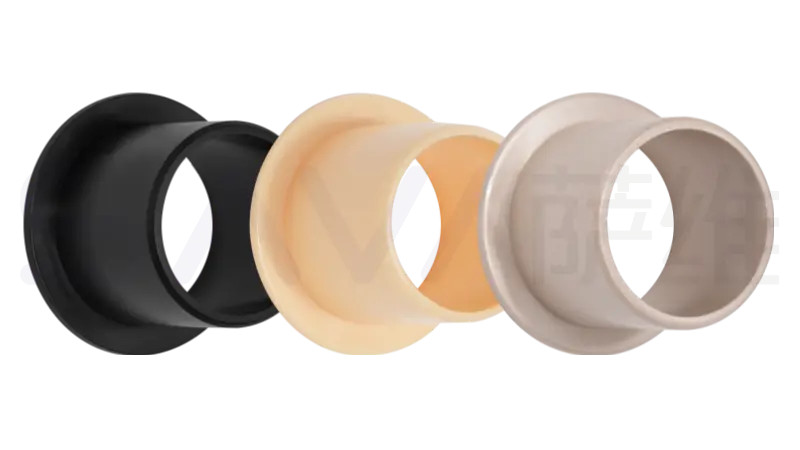
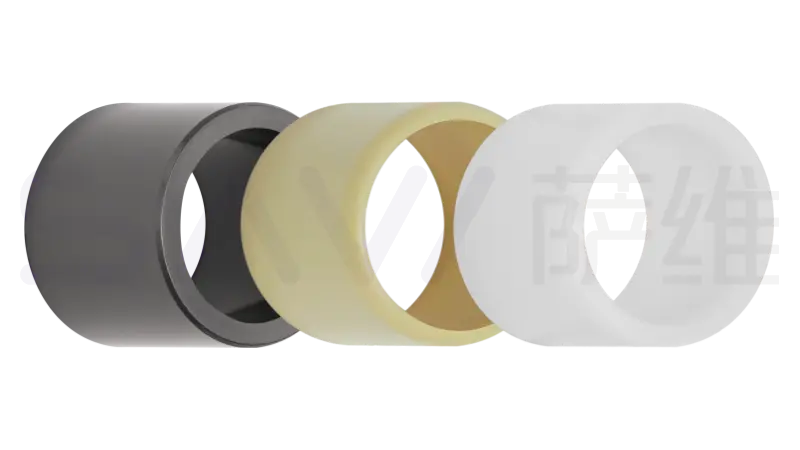
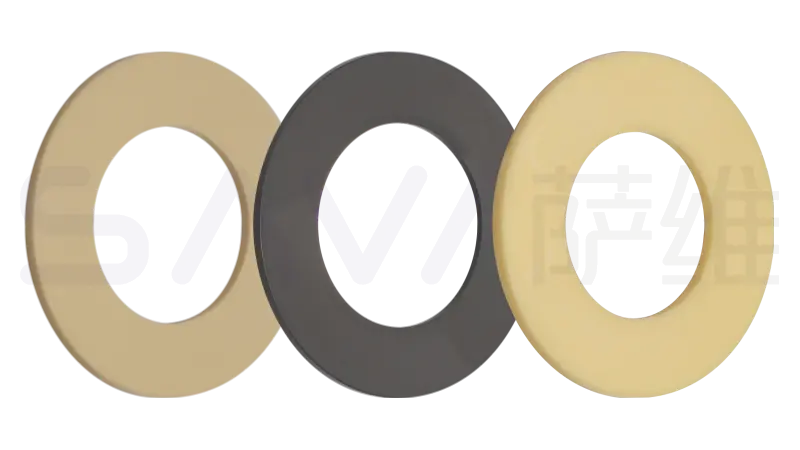

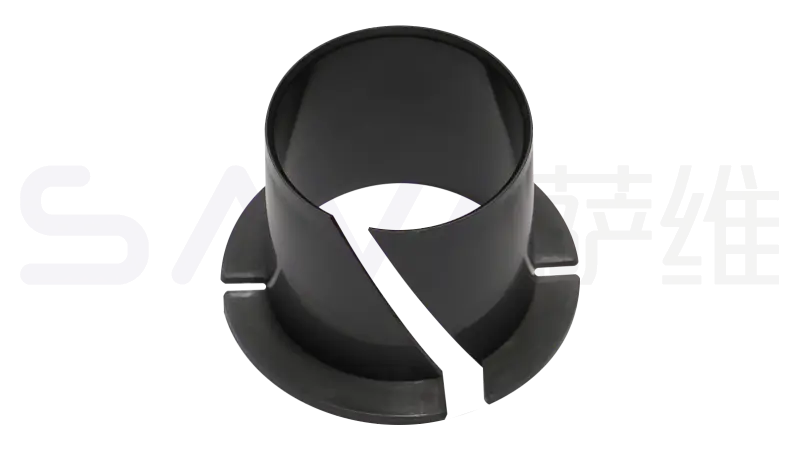






| Material Properties | Unit | SF-20 |
|---|---|---|
| Max Load - Static Load | N/mm² | 250 |
| Max. Load – Low-speed Operation | N/mm² | 140 |
| Max. Load – Rotary & Oscillating Motion | N/mm² | 70 |
| Max P.V Value (Grease Lubrication) | N/mm² × m/s | 3 |
| Operating Temperature | ℃ | -40/+110 |
| Friction Coefficient | μ | 0.05~0.20 |
| Max Linear Vel. (Dry Friction) | m/s | 2 |
| Max Linear Vel. (Fluid Lubrication) | m/s | >2 |
| Thermal Conductivity | W/(m·K) | 4 |
| Linear Expansion Coefficient | K⁻¹ × 10⁻⁶ | 11 |
* Full grease filling of oil pockets is required during initial assembly. | ||
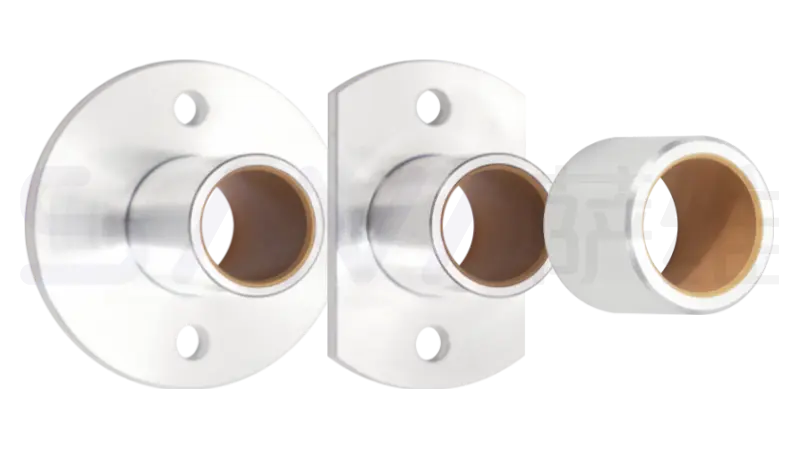
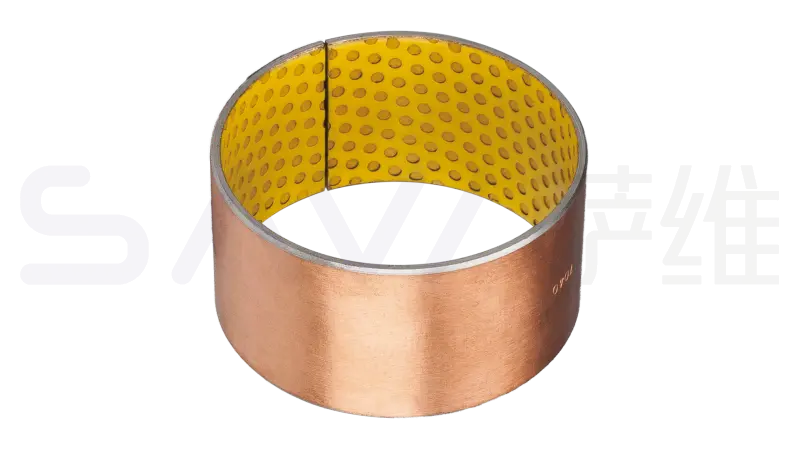
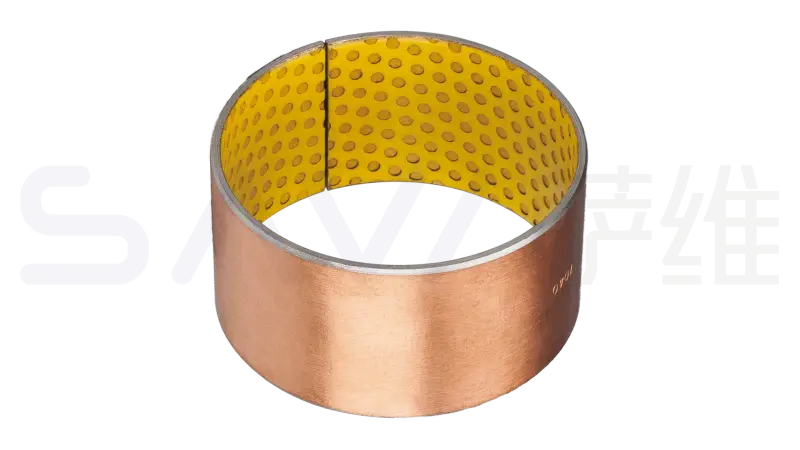
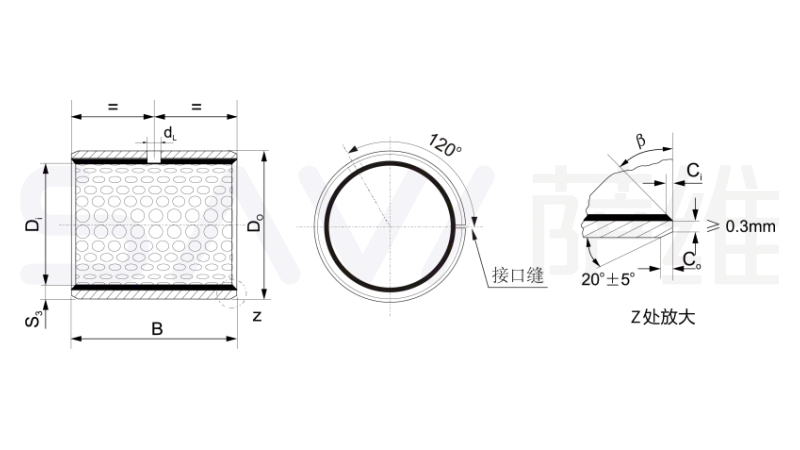
1.Modified POM (polyoxymethylene), thickness 0.30‑0.50 mm, delivers favourable wear resistance and maintains a low friction coefficient even under temporary oil starvation. The bearing surface is provided with regularly arranged oil‑retaining pits with thread angles, which shall be fully filled with grease during assembly.
2.Copper powder layer: 0.20‑0.35 mm. It features high load‑bearing capacity and wear resistance. Its excellent thermal conductivity promptly dissipates heat generated during bearing operation. Composite material penetrates into the gaps between copper powder particles to improve bonding strength.
3.Low‑carbon steel provides the bearing with load‑bearing capacity and heat transfer function.
4.Copper‑tin electroplated layer: 0.002 mm, granting the bearing good corrosion‑resistant performance.