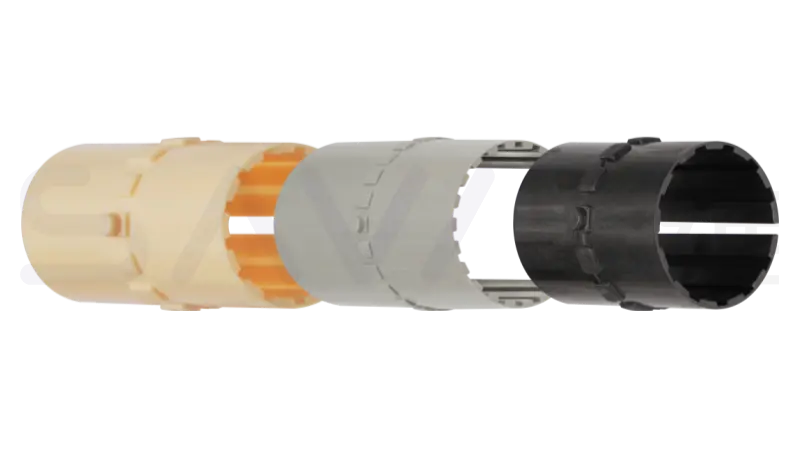
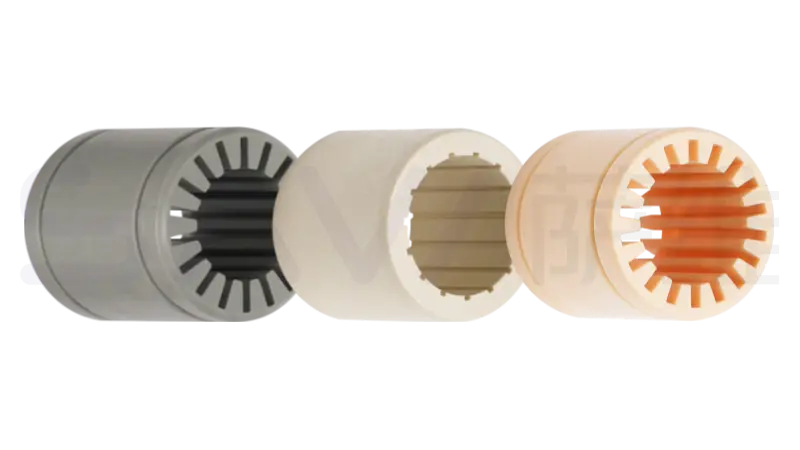
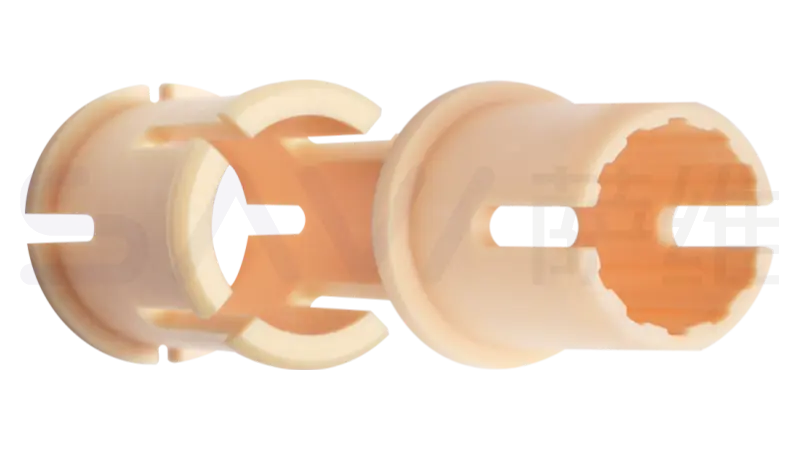
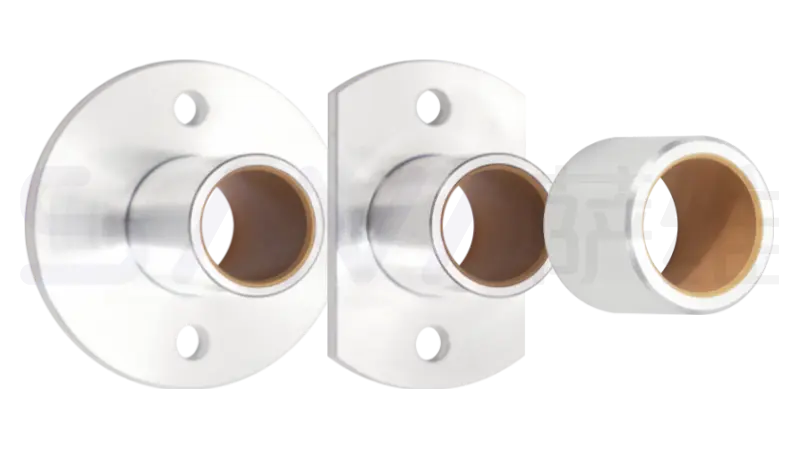
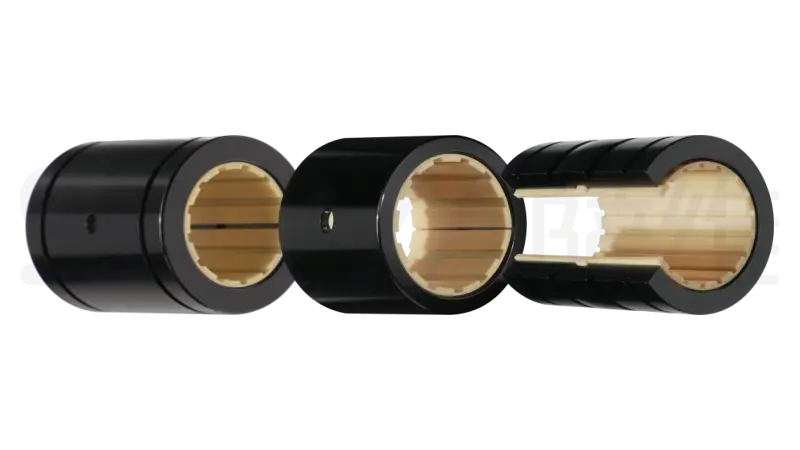
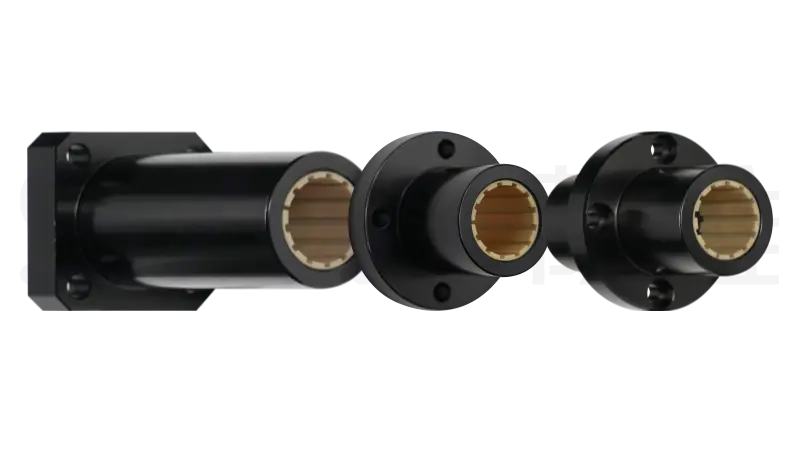
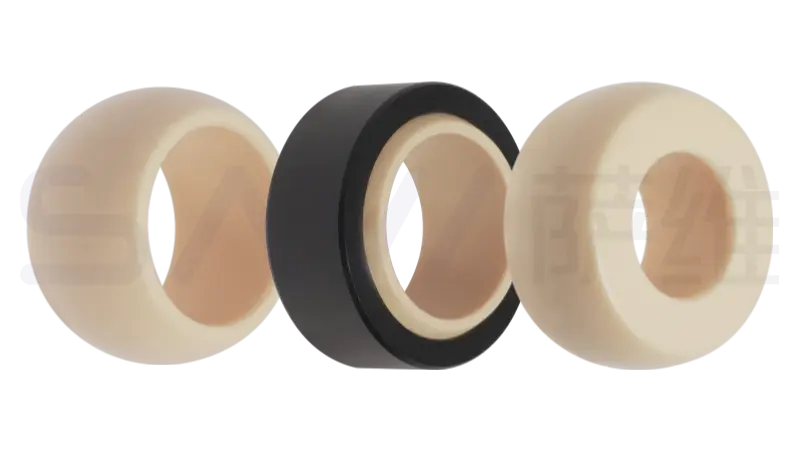
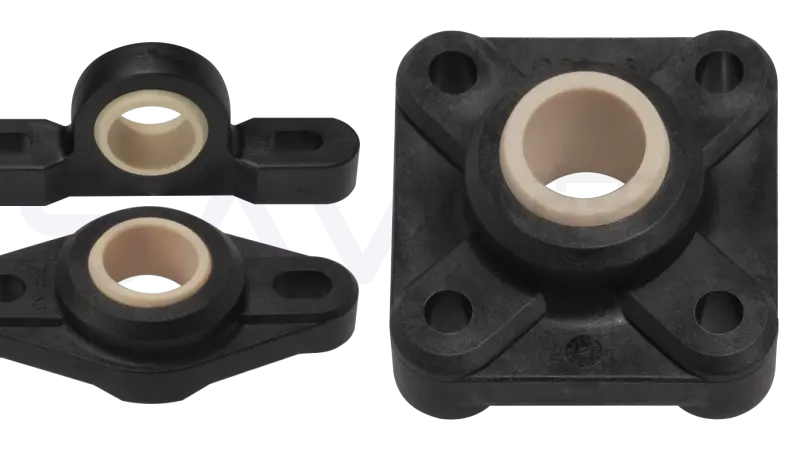
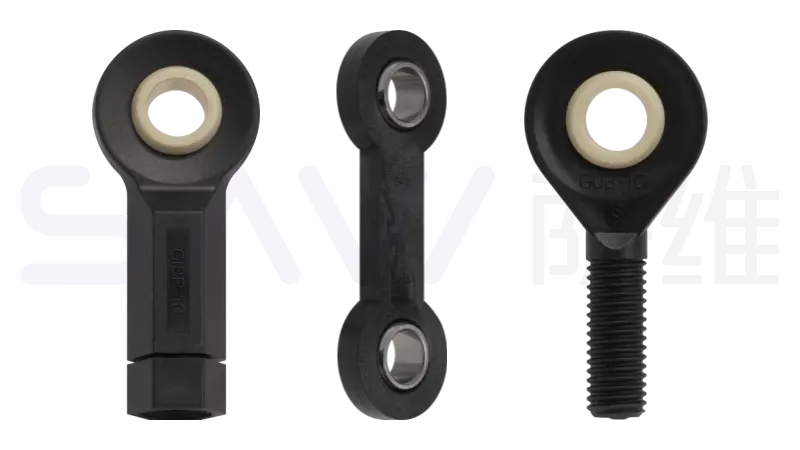
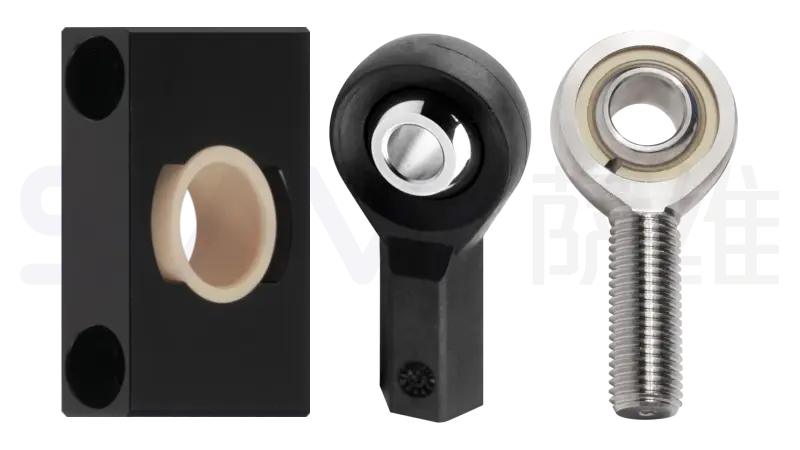
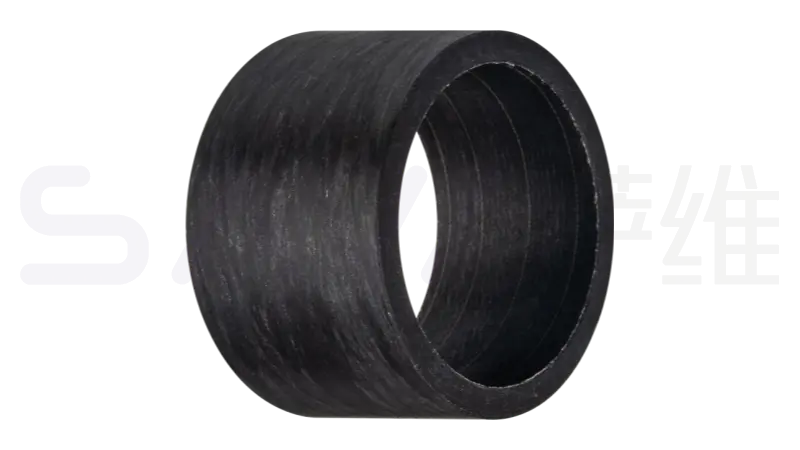
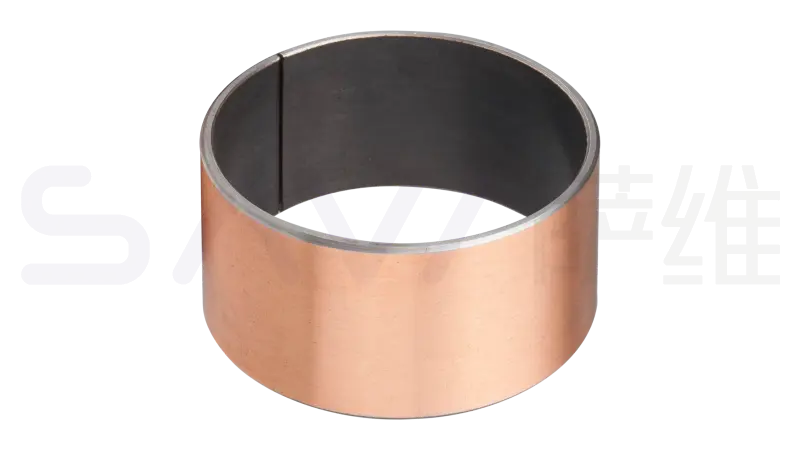
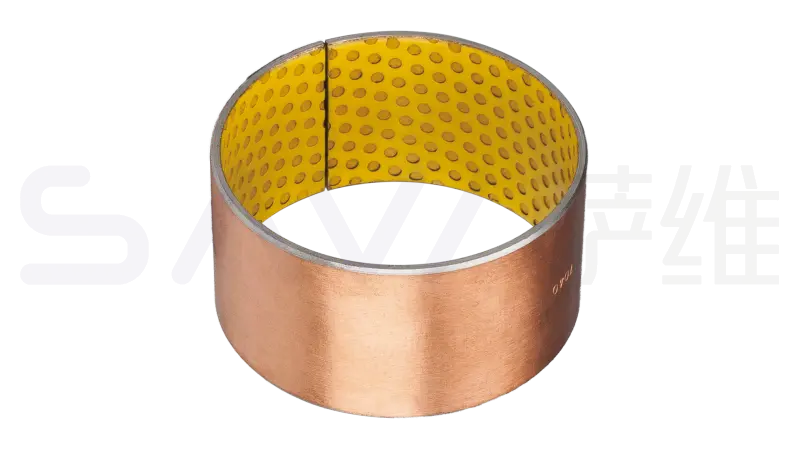
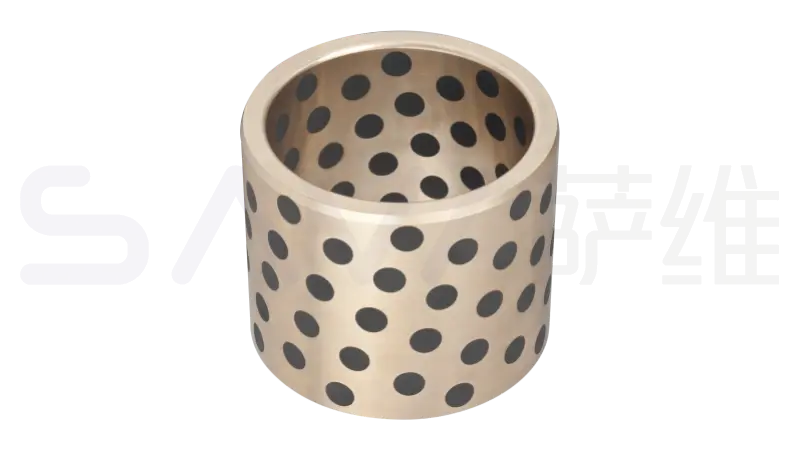
Zhejiang SAVI Intelligent Drive Technology Co., Ltd. provides maintenance-free, low-noise and long-life rotational pair solutions for brake, clutch and accelerator pedal pivots with SAVI-SPBF self-lubricating flanged bushings.
For years, we have focused on one single goal — making rotation and sliding operations quiet, durable and maintenance-free. In automotive pedal assemblies, the pivot bushing between the pedal arm and bracket is small in size, yet it determines whether the pedal feel is smooth and fluent or stiff and noisy. This solution focuses on our core product, the SAVI-SPBF self-lubricating flanged sliding bearing.
The pedal assembly serves as the most direct mechanical interface between drivers and vehicles. Every press on the accelerator, brake or clutch transmits force from the sole of the foot through the pedal pad, pedal arm and pivot pin to the booster or cable. In this force transmission chain, the pivot bushing is the only rotational pair. It bears radial loads from pedaling force, resists lateral offset loads, and maintains stable clearance without noise or jamming after tens of thousands of reciprocating swing cycles.
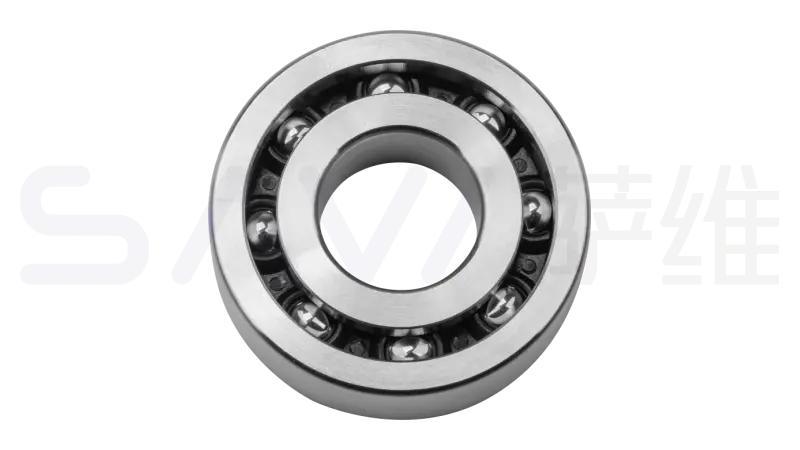
Traditional solutions mostly adopt needle roller bearings or powder metallurgy oil-impregnated bearings. Though mature and low-cost, they bring persistent troubles for vehicle manufacturers: reliance on lubrication, prone to abnormal noise, poor dust resistance and increased clearance in the later service stage. These industry pain points drive the development of SAVI-SPBF.
Application Scenario: The “Silent Joint” at Pedal Pivots
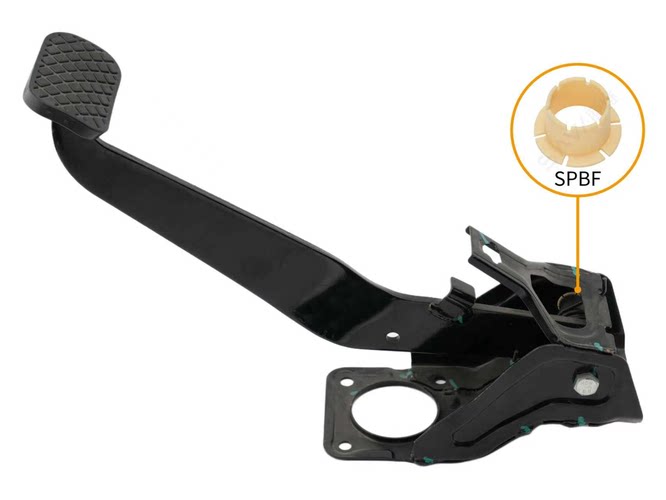
Installed between the hinge holes of pedal arms and brackets, SAVI-SPBF is fixed into bracket holes via interference press fitting, with pivot pins swinging and rotating inside the bushing inner bore.
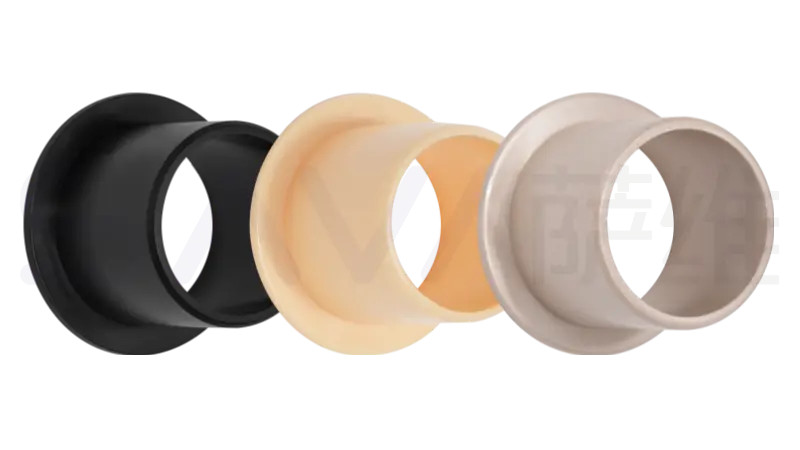
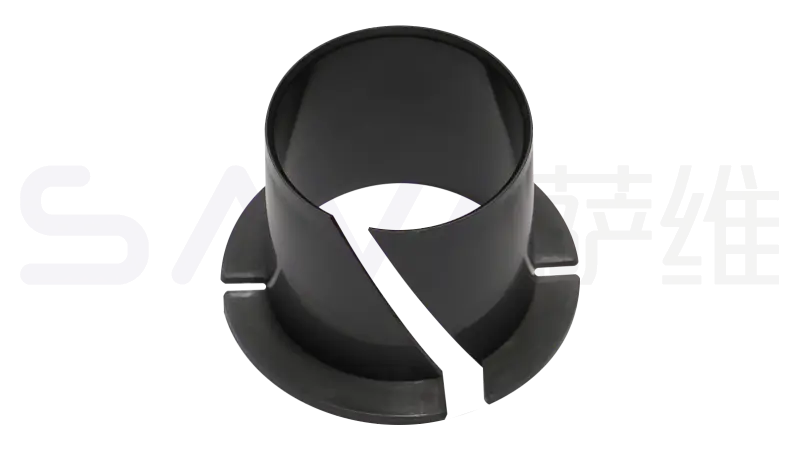
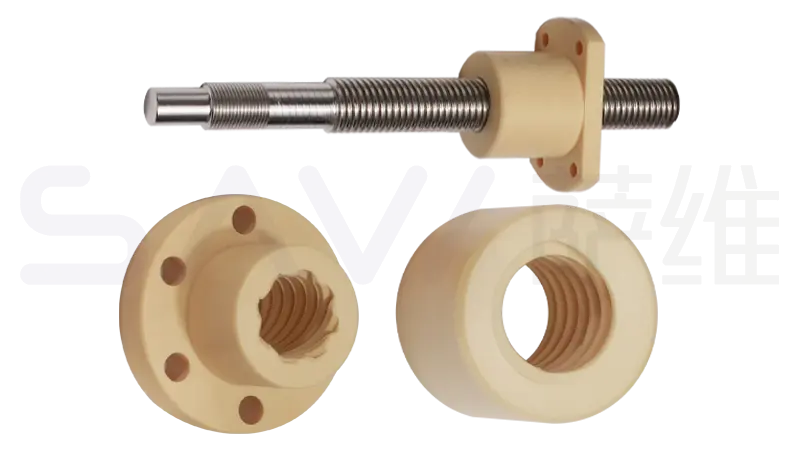
The flange provides axial positioning to prevent the bushing from dislocating out of the bracket hole. The cylindrical section forms an interference fit with the bracket hole, enabling reciprocating swing movement of the pivot pin inside the bushing. The entire structure requires no additional grease and achieves solid lubrication relying on the bushing’s inherent material properties.
 Five Core Functions in Pedal Assemblies
1. Reduce pivot friction to ensure smooth and light pedaling feel;
2. Isolate metal-to-metal contact to prevent wear of pivot pins and mounting holes;
3. Realize full self-lubrication and zero maintenance;
4. Achieve axial limiting via flange structure to avoid component displacement;
5. Cushion and damp vibration to eliminate operating noise;
It is worth noting the unique working conditions of pedal systems: instead of continuous rotation, pedals operate via low-frequency reciprocating swing, bearing medium and low loads with occasional impact loads from sudden pedaling. Located at the front cabin firewall, pedals are exposed to dust, temperature and humidity changes, and car washing moisture. Such working conditions combining swing motion, occasional impact and variable environments perfectly match the application advantages of self-lubricating bushings.
Industry Pain Points and Challenges
Before the popularization of self-lubricating bushings, pedal pivots mainly relied on needle roller bearings and powder metallurgy oil-impregnated bearings. Both share identical failure modes rooted in lubrication defects.
① Lubrication failure, stiff operation and abnormal noise
Needle roller and oil-impregnated bearings depend on grease or immersed oil. Once lubricant loss, oxidation or seal failure occurs, direct metal-to-metal contact between rolling elements and raceways sharply increases friction coefficient and operating temperature, causing rustling and buzzing abnormal noise and stiff pedal feel.
② Increased clearance and rattling noise
Wear gradually enlarges fitting clearance, resulting in pedal looseness and slow return. Lateral force triggers clicking knocking noise. Cage deformation and raceway wear will eventually cause jamming and locking failure.
③ Poor dust and water resistance, high maintenance dependence
Dust and moisture invading the front cabin area accelerate grease deterioration and metal corrosion. Eccentric installation will further cause high-frequency squeaking. Traditional solutions require regular grease replenishment, increasing overall vehicle maintenance costs.
During visits to multiple OEMs and Tier 1 suppliers, the most frequent feedback is: “New pedals work well, but abnormal noise occurs after two to three years of use.” “4S店 inspections show dry and worn bushings after disassembly.” The essence of the problem is that traditional solutions rely on external grease for lubrication, which is the most unreliable factor for pedal operating conditions. This is the fundamental industry problem we aim to solve.
Industry trends also validate this judgment. Leading automotive enterprises report that the application volume of self-lubricating bearings per passenger car has exceeded 100 pieces, continuously replacing traditional needle roller and powder metallurgy bearings, which are widely applied in BMW, Volvo, Tesla, Audi, BYD and other vehicle models. A German manufacturer also develops self-lubricating engineering plastic bearings for pedal systems with a zero-clearance design capable of radial and axial preload, featuring backlash elimination, edge load resistance, low stick-slip performance, high static load and lubrication-free operation. SAVI-SPBF strictly follows this advanced technical route.
Overall, SAVI-SPBF delivers clear value: a slightly higher one-time component cost brings full-lifecycle benefits including zero maintenance, low noise and low complaint rate. It aligns with the industry consensus of full-lifecycle maintenance-free operation, lightweight design, low noise and zero additional lubrication, and serves as the core driving force for self-lubricating bearings to replace traditional needle roller and powder metallurgy bearings.
“Embed lubrication into materials and positioning into structures”. This is not a single-parameter advantage, but a system-level innovation that integrates load bearing, self-lubrication, positioning and weather resistance into one thin-walled component.
Conclusion: Integrate Quietness and Reliability into Every Bushing
Small as pedal components are, they determine vehicle safety and user experience. The industry has long been plagued by the vicious cycle of lubrication failure, abnormal noise, looseness and jamming. Self-lubricating bushings internalize lubrication as a material property, realizing a decisive technological transformation. SAVI-SPBF is SAVI’s industry solution: solid lubrication for zero maintenance, flanged structure for accurate positioning, and preload design for ultra-quiet operation.
We cooperate deeply with OEMs and Tier 1 suppliers to customize dimensions, materials and preload values according to specific pedal working conditions, ensuring every pedal stroke of every vehicle is smooth, quiet and reliable.